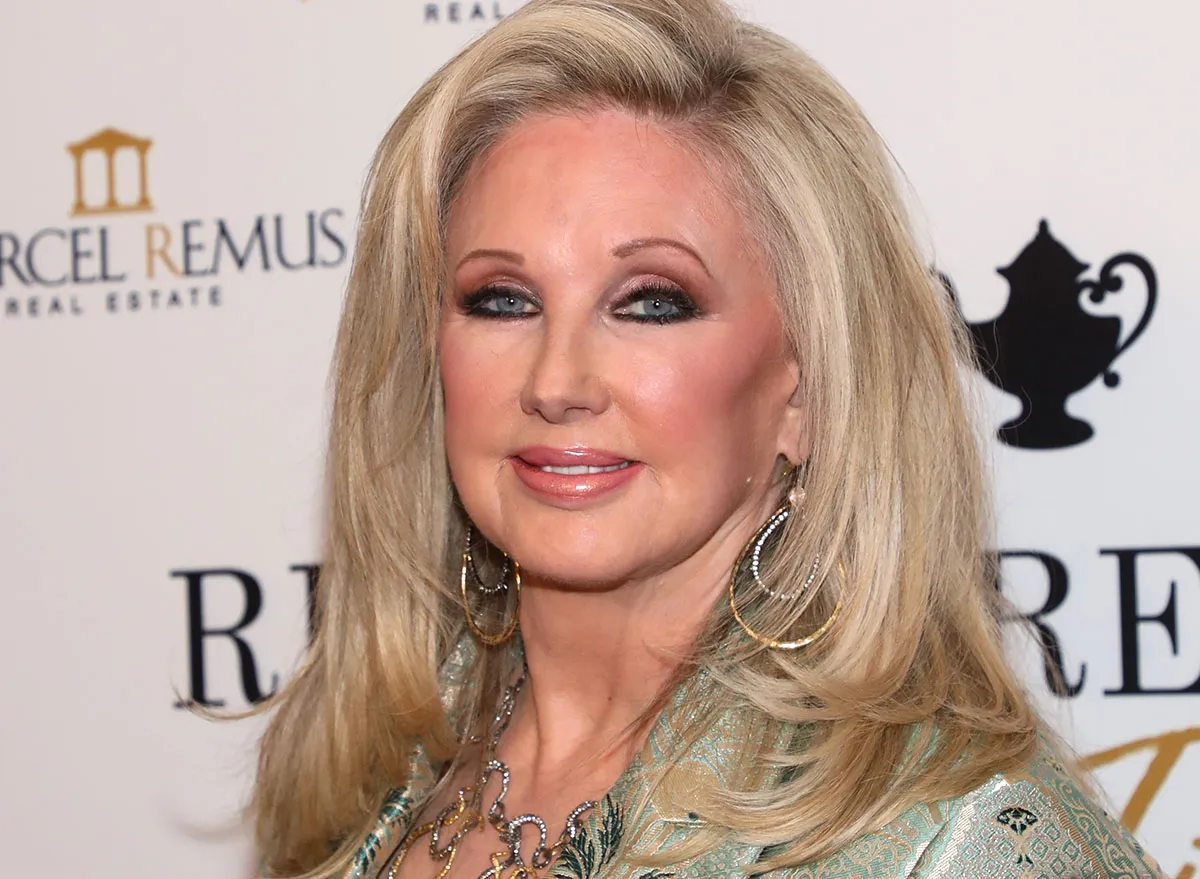
You began working in the theater at just 10 years old. How do you remember those early beginnings?
I was a very shy kid, one of those kids teachers love. I made straight A's and never opened my mouth. But one year, one of the teachers decided we had to give oral book reports instead of written ones. And I stood in front of a class for three days, and nothing would come out. My mother decided no child of hers was going to be that incapacitated, so she enrolled my sister and me in drama classes. My sister loved it. Every Saturday, she would get excited to go, and I would go into the bathroom and throw up (laughs). I was terrified. But at the end of the year, one Saturday morning, my mother was reading the newspaper, and she said, "Oh, the Junior Players Guild is having auditions." And the Junior Players Guild was a really good children's theater in Dallas and did great productions.
Did you go and audition?
We went and sat in the back of the auditorium all day, waiting and watching other kids do little improvisations. And, you know, you're sitting there thinking, "I could do better than that, but I'm not going to go down there" (laughs). But finally, my mother said it was almost time to wind it up. And my sister said, "I want to audition." So I knew if I didn't go down and do it, I'd get yelled at all the way home by my mother. So we auditioned, and this very kind gentleman gave us both little parts. And to be honest, if I hadn't gotten some little thing that first time, I don't know if I would have ever had the nerve to go back. But I always like to say that I have a career today because my fear of the stage was second only to my fear of my mother (laughs).
What do you feel you took away from that experience?
Well, that that's the difference one adult can make in a kid's life — giving you that shot, that little pluck of confidence, saying, "I think you can do this that you don't think you can do." It means a lot when you're a kid. It means a lot any time, but when you're a kid, it really means a lot.

In 1967, you did your first film, which was Bonnie and Clyde, as a double. Which scenes required you to stand in for Faye Dunaway?
Oh, God. Tons of them. Anytime it's far enough away, or it's in silhouette, or it's the back of a head, it's probably me. There's one scene that got a big laugh in the theater, and that's when they're making one of their escapes from one of the bank robberies. And, from the back, they're shooting it as they come toward this truck full of chickens and almost hit it. If you look at the girl, it's the back of my head. And you can see my hair is a different color of blonde and is longer than Faye's. But you're not looking at me. You're looking at the chickens (laughs).
Going forward in time, in 1978 you originated the role of Jenna Wade in an episode of the acclaimed series Dallas. At the time, was there ever any discussion of expanding your character and making you a regular on the show?
Not at the time. The show wasn't even on the air yet when we shot it, so no one knew it would be such a huge hit. Later, they asked me to come back after Flamingo Road was canceled. But at that point, I had a development deal with a partner, where I would have been a producer of my own show, so I turned it down. But, of course, if I'd known it was going to stay on that long, maybe I would have taken it.
Considering the success the role later had with Priscilla Presley's portrayal, have you ever found yourself reflecting on what it might have become had you continued playing the role?
No, I don't. You know, if you make a living like I do as an actress, it doesn't do you any good to sit and look back and say, what if? I mean, that just eats you up. But in that case, I made a decision based on the fact that I had a partner with whom I was writing a script. We were doing a pilot that would star me, but I would also be a producer, so I would have owned my own show. It didn't turn out to work out, but I didn't know that at the time. Also, you have to consider that usually, in America, the lifespan of a show is about seven years, and Dallas was coming up on that time at that point, I think. And so you figure, "How much longer is this show going to be on the air?" But who knew (laughs).

Your memorable role in Flamingo Road embodied all the traits of a sex symbol, a label that's been associated with you countless times over the years. Do you feel comfortable with that description, or do you feel it confines you to a certain stereotype?
Well, there's a certain stereotyping. But, if you're going to be a symbol of something, you might as well be a sex symbol. It's better than some things I can think of. But yeah, in some ways, doing the glamour girls hamstrung me, because people don't really see you as doing other things, although as an actress who grew up in the theater, I see myself in a lot of other things. For instance, I wanted to be a doctor or a paleontologist when I was a kid, but I don't think they considered me for Jurassic Park (laughs). Also, I come from a family with a lot of lawyers, but when they cast me as one on Falcon Crest, they had me sitting on my client's desk, asking him if he wanted coffee. I said, "That's not what they do." I had to stand up for women's rights and for not making lawyers look like idiots.
Is there any anecdote you remember from filming Flamingo Road?
Well, one anecdote I remember very well is that after we did the two-hour movie pilot, we were shooting the first episode where my husband, Mark Harmon, and I were kidnapped at sea. Then we're put in this rowboat and left out in the ocean. We were really shooting it in the Pacific Ocean — that was before they CGI'd everything. The helicopter was overhead shooting us, and the boat was leaking. I was bailing, and Harmon is lying there because he's supposed to be shot. And I said, "Mark, bail!" He says, "No, I'm wounded." I said, "You're going to drown if you don't bail, honey. Bail, because we're sinking." (laughs)
How did you get out of that situation?
I was waving to the helicopter, saying we're really in trouble here, you know, like, "Please come get us." Finally, they came and put one of those rope ladders down and let us climb to safety. But I was actually getting kind of worried because we were very far from shore. A little scary in the land of great white sharks. You don't want to be sinking.

The series concluded with a cliffhanger. Was there supposed to be a third season?
We were definitely going to have a third season, and then a new executive took over the network and literally canceled us out from under. I bought a house, and John Beck bought a house — wife and four kids. We all waited until we were picked up to buy real estate. And I remember I was in a limousine on the way to the airport to go to New York to do all the press for the new season, and I got a call from Entertainment Tonight saying, "How does it feel to have the show canceled?" The new executive just decided he didn't want our soap opera on his network, even though we were a big hit for NBC pre-Bill Cosby. We were all in shock, but that didn't help with the house payments (laughs).
During the second season of Flamingo Road, The Seduction was released, a film where you had your first big-screen starring role. What memories do you have of your love scene in the hot tub with Michael Sarrazin?
Well, first of all, Michael Sarrazin was just the loveliest, most wonderful, kind actor, and died way too young. He was just great to work with — a very shy, quiet kind of guy. And the thing I remember most is that we shot it for hours, hours and hours, and there was a lot of chlorine in the hot tub. My skin got burned so badly by the end of the night; I felt like I was in a pool of acid. It peeled for days. So it's one of those things that looks hot and steamy and very sexy, but in the meantime, you're kind of dying inside. You're thinking, "It's acting, it's acting." (laughs)
There's a story going around that Bette Davis was so impressed by your performance that she sent you a letter of congratulations. Is that true?
No, that's not true. Natalie Wood sent me a letter congratulating me on Flamingo Road. I had worked with Natalie a year or so before, and we had become great friends. She sent me a letter of congratulations for getting the series, and I called her back and said, "Well, guess who we're opposite? Hart to Hart." You know, her husband's series (laughs).

In 1983, you ended up working with Bette Davis on the pilot of the series Hotel. What was it like to work alongside someone of her stature?
Bette was amazing and so kind to me. I really wanted the pilot because I would have scenes with her. Again, it was a two-hour movie, like they used to do back in the day. I'd been warned that she doesn't like working with women. She's always really early, always barking at the crew, "What are we waiting on?" So I arrived at the set. We were shooting at this beautiful mansion in an area called Hancock Park, which was kind of like Beverly Hills in the '20s, where the old movie stars had their properties. My trailer got lost, along with all my wardrobe, my makeup, and everything in it. I was sitting on the grass in front of this big mansion, knowing that Bette Davis was going to be waiting on me because I couldn't get ready.
How did you navigate that moment?
So I was having a nervous breakdown, and my heart was in my throat. Fortunately, at the beginning of the scene, I wasn't in it, so she and James Brolin were shooting what they could without me. Finally, the trailer arrived. I threw on all the makeup, grabbed all my stuff, and ran in. Elaine Rich, who was the producer, said, "Have you met Miss Davis?" And I said, "Well, no, not really," because, indeed, I had been at a couple of gala dinners where she was at the same table and we had been introduced, but she never spoke to me. Then I presented an Academy Award that year, and waiting backstage, she was standing like two feet away from me, chain-smoking, but still never spoke to me. Anyway, I said I hadn't met her, and she said, "Well, come meet her."
What was that meeting like?
We went, and Elaine said, "Miss Davis, this is Morgan Fairchild." I said, "Oh, it's so lovely to meet you." She replied, "We met at the Valentino Awards." That was one of the dinners where I'd been seated with her. I said, "Well, I'm so sorry. I didn't think you'd remember." She replied next, "And I have something to say to you." I swallowed and said, "Yes, ma'am." The whole set stopped — you could hear a pin drop. Finally, she said, "You are marvelous," and she added, "And another thing..." before starting to go through everything I'd ever done on film: obscure things, tiny parts. Finally, I said, "Miss Davis, that's very kind of you, but that wasn't a very good movie." She said, "Well, I saw what you were trying to do with it." So, she kind of adopted me.

Well, it turned out to be an unexpectedly good encounter. How did the rest of that shooting day unfold from there?
You know, I went to set my stuff down, and the producer came over and said, "Me, I can't get ‘good morning', and you, you get ‘marvelous'?" (laughs) Anyway, she followed me around all day. She told me, "I've never done a series before. What can I expect from these bastards?" So I told her about some of my battles with the networks. She said, "That's what I like about you. You remind me of me when I stood up to Jack Warner." I said, "Well, no, Miss Davis. When you stood up to Jack Warner, you changed the business." I mean, people can look it up — it's historically accurate that she changed the business. Another funny thing: she was a tiny little person, and she looked up at me and said, "How tall are you?" I replied, "5'4''." She said, "Me too." And I'm thinking, "Maybe once" (laughs). But she was lovely.
Did you stay in touch over the years, or was your relationship limited to filming that episode?
Yes, we did. She would call me and talk. I remember one time she and James Stewart had done an early HBO film about an elderly couple that had a suicide pact. She called me up and said, "They want me to come to a screening at the Director's Guild, and I have to be there. I don't know what to say to anybody. What if they don't like it? Will you come and be with me?" I said, "Sure, of course." I was dating Johnny Carson at the time, so I told him, "Johnny, we have to go to the screening at the DGA for Bette." We walk in, and I'm looking around — the whole lobby is full of people, and I can't see anybody, but Bette's quite small. I figured she's there somewhere. Finally, this group of guys kind of parts, and I see her there.
Was she still worried about having to be there?
She was like, "Oh, Morgan, thank God you came. Hi, Johnny. Now, what am I going to say? They have to sit here and watch. I have to stay till the end. And then they're all going to walk out by me. And what if they hate it?" You know, I'm sort of marveling at the fact that Bette Davis is nervous about anything. I said, "Bette, listen. Johnny and I are going to stand here with you. If people come over and want to say something nice, they'll say something nice, but you don't have to say anything. You don't have to talk to anybody you don't want to. We will stand here with you as everybody leaves so you have somebody to talk to." So we did that. Of course, everybody loved it, and it was brilliant, as always. She and Jimmy Stewart — how could you go wrong?

What a beautiful relationship you had with her, right?
Oh, she was wonderful. Well, I don't know if people in your country know Johnny Carson, but he was the biggest late-night talk show host for decades here. I ended up breaking up with him and never talked to the tabloids about it — never said a word. But after I broke up with him, I was sure everybody thought, "Oh, he dumped the little blonde." Anyway, I was at some big gala at the Beverly Hilton, and it was all Hollywood celebrities. I felt a tap on my shoulder, I turned around, and it was Bette. She leaned over and said, "You were quite right to dump him" (laughs). She knew.
In the mid-1980s, you played attorney Jordan Roberts in the fifth season of Falcon Crest. What was the process like in bringing to life such a complex character, who suffered from what was then known as multiple personality disorder as a result of years of childhood abuse?
Well, I was very interested in it because, at that time in America, there had been a movie that came out called Something About Amelia, which was about childhood incest. But the adult repercussions of it had never been done before. And it's now well documented that one of the problems can be what they used to call a split personality—that, to handle the trauma, the brain kind of separates into different personas. I was very challenged to take it on and try to dramatize it, because I always like doing iconoclastic things, you know, things people haven't seen before, or haven't seen me do before. I like doing something different. But then they kept not writing it, having me sit on my client's desk and ask him if he wanted coffee.
How did you deal with that annoying situation?
I was getting frustrated that they had me come on to do this juicy thing, and now they seemed kind of scared about it. But I usually wore my own clothes on these shows, like Donna Karan and big '80s jewelry. I remember coming out of the soundstage one day, and one of the producers was coming out of the dailies. He said, "You know, Morgan, we were all saying, ‘Morgan's wearing those big earrings again.' Maybe you could try wearing some pearls or something." I just looked at him and said, "John, I'll tell you what. You give me a storyline, and I will wear pearls. But when I have nothing to do, I'm going to jazz it up. I may not have a storyline, but, by God, tomorrow morning every woman in America is going to say, ‘Did you see those earrings Morgan Fairchild had on last night?'" (laughs)

Did they end up giving you the storyline you were really craving?
Eventually, they did, and I did a lot of research on it. It was kind of traumatizing to do. I was very grateful they got John McMartin, a wonderful Broadway actor, to play my father—whom I loved in Follies—so it was great to actually be working with him instead of sitting in an audience watching him. And Jane Wyman was wonderful, you know—again, an older actress. Jane and Bette both said something to me, which I found interesting because they both liked me, and they both had a reputation for not liking to work with younger actresses. She said, "You know, you're so professional. You're very old-school, like we are. You're on time, you know your lines, you do your homework. And so many of the young people nowadays are so difficult to work with."
How did it feel to be validated by a legend like her?
There was a great respect from an older generation that felt like they were passing the mantle, and I really appreciated that. I remember the first day I actually saw her on the set. I was playing David Selby's lawyer, and he's in the hospital for some reason. Anyway, we were rehearsing to see where the cameras were going to go and who was going to sit down when. I had a scene with David, and as I leave and go through the door, Jane comes in, and I made some wisecrack. Nobody laughed, but then Jane did, so everybody laughed too. Somebody grabbed me and said, "Didn't anybody ever tell you, ‘Don't make jokes when Jane is on the set?'" And I said, "No. But she laughed." (laughs) But the one thing they did tell you is: don't ever bring up Ronald Reagan.
Was that still a sensitive topic for her, even after so many years since their divorce?
Well, that's what they said. And I told them, "I have good manners. I'm not going to bring up an ex-husband." It's like my mama didn't raise me that way, you know. But one day, we were sitting on the set in our director's chairs. I forget why, we had some big party scene, but we were all wrapped up because it was winter and they had the big soundstage door open. Out of the blue, she leans over and says, "Did I ever tell you any stories about Ronnie?" And I said, "Well, no, you didn't." (laughs) She was just lovely. I remember I came in one day to do another party scene, and Lorimar wouldn't give us any money—they had a really low wardrobe budget. So, if you wanted to look hot, you needed to wear your own clothes.

What did you wear on that occasion?
I came in this Jean Claude Jitrois, who was the hot Rodeo Drive leather designer at the time. I had this red leather jacket with big shoulder pads, a red leather miniskirt, and my big bangles. I came on the set and somebody came over and said, "Oh, you've got to go change. Jane's going to hate that." And I said, "Well, guys, if you gave me a real wardrobe budget, I'd have something to change into. But since this is what I brought, this is what I've got to wear." Anyway, about then Jane comes in in an A-line dress and pearls, and she kind of looks me up and down and looks at the jewelry. Then she came over, she took my hand, she went ping on this big bracelet that I had, and she said, "Well, this is what this show needs. A little damn glitz." (laughs) So I had Jane's approval.
Do you have a favorite memory or anecdote with her?
My favorite Jane Wyman story was when we were shooting in Napa Valley for the wine stuff—all the exteriors. We would go up there and the actors would stay at the Silverado Country Club, but the crew would stay at this Holiday Inn closer to the airport. One time I was just going to shoot one day, and I thought, "Well, I'll stay at the Holiday Inn and make it to the airport faster in the morning." But I got really, really sick with the flu, and I mean, it was very bad for two or three days. I could barely move. On the second day, I hear this knock at the door, and I assume it's housekeeping, and I'm saying, "Oh, just leave some towels." I didn't even know if I could make it across the room. But they knocked again, so finally I hauled myself out of bed and opened the door.
Was she the one standing there?
There's this tiny little woman with her hair in a bun and this giant pot of homemade chicken noodle soup—and it is Jane. I almost didn't recognize her at first; I'd never seen her without the wig and the makeup. But she always stayed at the Holiday Inn because she didn't like going back and forth, so she would camp out there because they gave her a big kitchen and she could cook and stay for the whole season. She had heard that I was sick and came down there and brought me homemade soup that she delivered herself, almost unrecognizable without all the flash and flair. And that is my favorite Jane Wyman story—just a sweet, sweet lady.

Around the same time, Jon Lovitz created the character Tommy Flanagan, The Pathological Liar on Saturday Night Live, whose main running joke was claiming he was married to you and had seen you naked. How did you react to that?
Well, I wasn't usually up that late watching Saturday Night Live. Anyway, I came in one Monday morning on Falcon Crest, and somebody said, "Oh, this guy on SNL did this really great joke about you." And I asked, "Yeah? What was it?" And he said, "God, I can't remember, but it was really funny." Well, a couple of weeks later, that same person came up again and said the same thing but still couldn't remember what the joke was. So I went through that for a while, and then the season ended. I'd still never seen it. Every time I'd try to watch, he didn't do anything about me, and I'm thinking, "What are they talking about?" So, in the fall, we came back into production, and he's doing it again. And I thought, "Well, I've got to get this guy."
What did you do to get him?
I called his agent, and I got his home phone number. So I called him up, and I said, "Hey, Jon, it's Morgan Fairchild." And he was like, "No, really, who is this?" And I assured him, "No, it's really Morgan Fairchild." (laughs) And he said, "Are you mad?" And I replied, "No, I think it's funny. I am not mad at all." He was just getting hit with the fame bulldozer that I had already been hit with, so I became kind of like a go-to big sister to try to help him navigate some of the onslaught. He'd call up and say, "Okay, this guy wants to interview me. Is he okay to interview with?" And when he got nominated for an Emmy, I called him and said, "You know, we've never really met. When you come up for the Emmys, why don't I take you to dinner?" And he replied, "Oh, great."
Did that dinner actually take place?
It did, and then the next night he's on the red carpet at the Emmys, and they're asking, "So, Jon, what have you done while you're in L.A.?" And he said, "Morgan Fairchild took me to dinner." Nobody believed him. (laughs) But I thought it was very funny, and he's a sweet, nice guy. He confided in me that he had the idea for the bit, but as to which actress to use, Al Franken was the one who thought of me. Al Franken, who used to be on SNL and then was a senator here, is a wonderful, wonderful guy. He's the one who suggested Morgan Fairchild.

Talking about SNL, there's a story that you were scheduled to host the show in 1986, but were filming Sleeping Beauty in Israel. Can you tell us what actually happened?
It was one of those very weird things. I was in Israel shooting Sleeping Beauty and talking to my mother on the phone, and she said, "Oh, I'm so excited. You're doing Saturday Night Live." And I asked her, "When am I supposed to do Saturday Night Live?" And she replied to me, "Oh, yeah, this Saturday. I saw it in TV Guide." I said, "Mother, it's Saturday Night Live and I'm in Israel. I'm not there." I emphasized the ‘live' part of the title. (laughs) I suggested, "Maybe it's Morgan Brittany." She goes, gets the TV Guide, and says, "No, it's you." And I said, "I don't know anything about this." And indeed, I knew nothing about it. I was overseas shooting, so there's no way I could have done it.
But were you actually booked?
Apparently, an agent at my agency, who wasn't my regular agent, had booked me, and he didn't tell my regular agent, never told me, never told the head of the agency, never told anybody. I think he had a little drug problem, maybe. And suddenly, I'm in hot water with Lorne Michaels, who thinks I stood him up, but I didn't. I was in Israel shooting a movie. So anyway, my one shot to get to host Saturday Night Live went down the drain. I would have loved to; it would have been fun.
In 1992, you appeared in three episodes of Roseanne as the bisexual girlfriend of Sandra Bernhard's character. That period came back into the spotlight after Sandra appeared on Andy Cohen's show and apologized for not having treated you well during filming. Although things have since been resolved, what happened back then and what led you to accept her apology?
Well, first of all, I would always accept anyone's apology if they're genuinely sorry for anything that happened. I do not know because I have not actually talked to her. She did a lot of stuff kind of online, but she never actually called me, so I'm not sure what it was that she felt she did wrong. They weren't really nice to me; they weren't very welcoming, she and Roseanne. Everybody else was great. But I don't recall them doing anything specifically to me—it was just that feeling you get that "we wish you weren't here." At some point, maybe we'll actually talk and I'll find out what she was referring to. But I've always believed that if someone feels they owe you an apology, even if you're not entirely sure why, you accept it in good faith.

Why did you decide to portray an LGBT character in the early 1990s, considering the homophobia and stigma that were prevalent at the time?
Well, you know, I'd done a lot of work all through the '80s on AIDS. I worked with Dr. Fauci, testified before Congress to get funding, was there for the unveiling of our first Quilt, opened the first AIDS veterans' wing in New York, did tons of TV specials. So I've always been about trying to help the gay and lesbian community just be accepted as people; you know, hello, we're all people. And I started in the theater when I was 10. My friends were always he, she, another—it's like everybody I knew was gay or lesbian. So, you know, I saw a lot of how they were treated and mistreated.
Was there any other key factor that led you to accept that role in particular, aside from your allyship with the LGBT community?
The whole script — it's Sandra talking about this hot new girlfriend of hers. And at the end of the first episode, she opens the door and I'm standing there. And given that, as you mentioned earlier, I'm like a sex symbol, I thought it was hysterical to have Morgan Fairchild standing there. Like I said before, I like doing things people don't expect to see you do, but I also like to stand up for people's rights. And so I could kill two birds with one stone there: I could do something iconoclastic, and I could also take the stigma off of the LGBTQ community a little bit. And, of course, then my lawyer asked me if I was gay, and I said, "No, I'm not." (laughs) But I will always stand up for everybody who is.
Talking about AIDS, which you just mentioned, you've said multiple times that your activism and work with patients cost you jobs and friendships. Can you talk about that period?
Well, I have these very odd hobbies, and one of them is emerging viruses and epidemiology. So when AIDS came along, I already knew what it was because I'd been following it. First, there was a little clip in The New York Times about people having Kaposi's sarcoma, which is a cancer that you don't see except in elderly men of Mediterranean extract—it was like 11 cases in New York. Then there were cluster cases—13, to be exact—with pneumocystis pneumonia in San Francisco. Then it came out that it was all in gay men, and I knew something new was out there. So anything I could find that I thought related to that, I would read. So then I was Rock Hudson's date to a Lifetime Achievement Award they honored him with.

When was this exactly?
It was a few months before he went on Dynasty, maybe like nine months before. I was shooting Falcon Crest at the time, and word was going around the studio that he didn't look well. I knew immediately what it was. I mean, people in America didn't know Rock was gay, but everybody in Hollywood knew. Anyway, I started doing interviews to talk about AIDS. When Rock was still alive, they were having a big fundraising dinner. Later, it became the amfAR dinner, but amfAR didn't exist at that time. Nothing existed at that time. And so I get a call from Ted Koppel, the anchor of Nightline, which is a big, heavy-duty news show in America. And Ted said, "Well, I hear you know more about this disease than anybody out there."
Did he invite you to be on the show?
He said, "Well, we're doing a panel tonight on AIDS." And I'm like, "Oh, great. We need to take the stigma off." And he said, "Yes. And we've got our staff doctor, we've got Marilyn Beck, the gossip columnist..." I knew she would go for the fear mentality because everybody was terrified. Everywhere you went in L.A., paparazzi would grab you on the street and say, "Are you ever going to kiss anyone again?" You know, after Linda Evans had kissed Rock. And then Ted said, "Well, we have this big star, but he wants a single and I want a panel. And I don't know how to say this..." And I said, "Ted, just stop. If you can get a big star, that's beneficial. But if he drops out, I'm happy to fill in."
What happened next?
I told him, "I don't care about a single; I'm happy to be on a panel. It's not about me, it's about the disease. But I'm at work." They were going to shoot it at the event. The event was black-tie, and I didn't have my dress there. So I said, "If this star stands you up, let me know, and we'll try to figure it out." Well, indeed, the big star stood him up, so they went to my house and my maid gave them my dress, my shoes, everything. I changed into my evening gown in the backseat of the limo, whizzing down the freeway to the Biltmore downtown. They take me in, they put me literally in a cleaning closet, put a tarp over the Ajax and the mops, and I'm sitting there with my first satellite feed with this little plug in my ear.

What do you remember most about the experience?
I had a little camera looking at me, but I couldn't see anything else going on. At one point, Ted says, "Can you get it from kissing?" And I piped up and said, "There's no evidence you could get it from kissing. The virus that this one most closely tracks is Hepatitis B. And in studies in San Francisco, they've just isolated Hepatitis B in saliva, but still no evidence it's transmissible that way." And so Ted says to the doctor, "Is that true?" And the doctor said, "No, that's not true." You know, I'm not going to argue with an M.D. on national television. So anyway, I was told later by the producer that what happened was: we got off the air and the doctor was so mad that this little Hollywood blonde acted like she knew something that they went in and looked it up.
Did that lead to anything?
The next day, they all called me to apologize because my research was more up to date than the doctor's. And so then I became like the go-to person for AIDS for Nightline. But, you know, I have these weird hobbies that people think mean you're crazy, but it gives you information that you feel is important to share with the public if you have the guts to do it, knowing you're going to lose work, and knowing in some cases it will make you a pariah. And indeed, I think they wrote me off a show I was doing because of it. And I've had casting people confirm to me that when my name came up during that period in casting rooms, people would say, "Oh, she's too controversial with all that AIDS stuff."
What kept you going with all of this happening?
I felt a moral obligation because I was the only famous face, glamour girl, sex symbol that could get out there and explain what a retrovirus is and how it works, how you do and don't get it. And to try to take the stigma off the gay community and get it treated as just a disease, and get funding going for it. Because at that point, there were a lot of reactionary folks that I heard many times say, "Just let them die. I don't like those guys." And that's the most horrible thing you can ever hear. I remember when I was testifying before Congress, one Southern congressman said, "Miss Fairchild, just tell me: how many of my straight, Christian, God-fearing constituents are ever going to deal with this disease?"

What did you reply to him?
I just looked at him and said, "Sir, it's a disease. It doesn't respect gender or sexual orientation or age or color or race or your district line. Your constituents will be affected by this because it's a disease, and we need to treat it as that." He didn't say anything else (laughs). But, you know, it was a very hard time. I lost friends. People didn't want me around their kids. They didn't want me eating off their dishes. I remember one of my friends, who worked at one of the big tabloid magazines, called me when Rock was still alive and said, "We want to do a ‘Hollywood Fights AIDS' article with a big picture of a bunch of celebrities. Will you do the picture?" I said, "Sure." He called me back a couple of weeks later and said, "I just want to thank you."
What was he thanking you for in particular?
He told me, "Everybody turned us down..." and that includes a lot of people now well known for their AIDS activism. He said, "Everybody turned us down until you said yes, and then you made it safe for everybody else to say yes, and that's how we got our picture." And that was sort of what I felt like my job was a lot of the time in the '80s: to be up front and take the hit to make it safe for other people to get behind me, talk, and try to get funding for it.
Do you remember how you felt back when you were first visiting hospices?
I remember the first hospice I went into. I was very nervous because, you know, these guys are not in good shape, and what do you say to somebody you don't know who's in hospice? I'm going to go in and greet a bunch of guys, and then what? And I walked in, and three of them ran up to me and said, "Morgan, we want your eye makeup secrets." And I thought, "I can do that." (laughs) You know, bring a little joy and comfort into people's lives, letting them know that you were willing to hug them when nobody else would—I mean, pre-Princess Diana. And, most importantly, make them feel loved, valued, and comforted.

Shifting gears a bit, you played the mother of Chandler, the character portrayed by the late Matthew Perry on Friends. What was your impression of him, and how did the news of his passing impact you?
Oh, God, Matthew was such a sweetheart. You know, it was a tragedy. It was hard being around peripherally and seeing him going through it because I wasn't on the show all the time; I would come in and out and not really be able to help. And, of course, we all thought that he'd gotten through it and everything was better, and then suddenly he passed away. I was just devastated to hear about his death. I always remember when they offered me the part: the show was not a big hit yet, but I'd seen it and thought it had potential. I thought each one of the kids were really good individually, but also that they had great ensemble work.
Do you recall when you were first approached for the project?
When they offered me the part, it was the first time I would be playing the mother of a grown-up. I had played mothers of kids and mothers of teenagers, but never a mother of a grown-up. And Cicely Tyson, a wonderful actress, said to me, "Oh, Morgan, you're too young to play that guy's mother." And I said, "Well, you've got to make that transition at some point." I liked the show; I thought it was cute. And I have this theory that every five years you have to reintroduce yourself to a younger audience, and this show is geared toward younger audiences. And I thought, "I'm going to do it."
What was your first day on the set like? How did you meet Matthew?
The first day on the set, Matthew came running over to me because he was a tall guy but like a big puppy dog. He said, "Oh, you won't remember me, but I used to hang out with you on the set of Falcon Crest with my dad." And I'm like, "Who's your dad?" And he replied, "John Bennett Perry." His father had had a recurring part as a sheriff on that show. And I'm like, "Oh my God, you were that little kid?" And I thought, "I guess I am old enough to play this kid's mother." (laughs) So I had a maternal kind of feeling for him because I knew his dad and I had known him when he was younger. That first year, it was great fun, and then the show became a huge hit.

How did things evolve from there?
Well, I was one of the first celebrity guest stars on Friends, and I remember I ran into Matt LeBlanc and Matthew Perry at a Blockbuster video store. They came running up to me together, gave me a hug on each side, and said, "You've got us in the top five." I felt like I helped the show a little bit and contributed something. But then, as time went on, I'd come back and started hearing rumors about some drug problems. He was always fine in rehearsal—I didn't really see it, except that he didn't hang out as much; he would go straight into his dressing room. On set, I didn't see it, to be honest. I don't know if other people who worked with him more regularly than I did saw it or not. But I remember at one point, after he'd gotten out of rehab, his father, John, was on the set, and we had some long talks.
Did you give him any advice?
Well, I've had several men in my life who had drug and alcohol problems. And so I'd been in a group called Al-Anon for decades at that point. Al-Anon is like AA for the family of the person with the drug problem. They teach you how to handle it and how to deal with them in a constructive way. So I tried to encourage him to do that. I don't know if he did. And then, because I had a history, I did talk to Matthew and say, "I know you're out of rehab, and I've been around the program for a long time. Here's my phone number. Call me if you feel like you want to talk about anything." You know, I was trying to do a real ‘come to Jesus' kind of talk. He never called, and I wish he had. But, then it seemed like he'd gotten better.
Did you feel he had moved past those struggles with substance abuse?
It seemed like he was doing so well. He had his book out and was helping other people with their drug and alcohol problems. And he had his foundation. So it was really a shock when he suddenly passed away, and just a tragedy—not only because a promising young actor died, but because he was such a nice guy. I mean, he was a sweetheart, a big puppy dog. That's how I always remember him, bounding over to me—all arms and legs—on the set that first day.

Coming to the present, your new project is a podcast called 2 Bitches from Texas, which you host together with your sister, actress Cathryn Hartt. How did the idea come about?
Well, the idea came about because we're both actresses and started in the theater when we were kids. She's the one who has a Juilliard degree, is now teaching acting in Dallas, and has won all these awards—Best Acting Coach in Texas a bunch of times from different trade magazines. Anyway, during COVID, we felt like we were kind of losing touch a little bit because of the time difference between L.A. and Dallas. And you're always afraid you're going to call when they can't talk or interrupt something. So we started doing a weekly Sunday night phone call. Then we were saying, "You know, what could we do together?" All these years we were always wanting to work together on something.
How did that translate to the idea of making a podcast?
One of her students had moved to Italy, and Cathryn had done a podcast episode with this student from Italy. So you didn't have to be in the same room like we're doing right now. And I said, "We could do a podcast. We could do that together and make it just like our Sunday night talks where we talk about everything under the sun." And so we came up with that. And then, of course, you have to think of a name. After trying different options, I just said, "Well, really, it's just two bitches from Texas sitting around talking." And then I was like, "You know, that's kind of a good name." (laughs) So it seems to be memorable. People remember it.
Is there a theme? Are you aiming toward a certain audience?
There is no theme. I have very eclectic interests, and so we're doing that. Our first episode was with Donna Mills from Knots Landing. We talk about all kinds of stuff, not just the Hollywood thing. We discuss her adopting a child at 54, life choices, and other topics. Then we have my friend Tom Nichols, who is a Russia expert, taught at the Naval War College for 25 years, and now writes for The Atlantic—a very serious guy. We talked to him about some of his books and articles. He had a book out called The Death of Expertise. We're getting a really good response. I wasn't sure how people would feel going from Donna to Tom, but we're getting a really mixed audience and a lot of people saying, "Oh my God, these are really good ideas."

Which has been your most recent episode to date?
The newest one features one of my sister's students, Nic Suarez, who's an influencer with 8.5 million followers on TikTok and started out turning himself into a vampire, which we had him do on the set. And, of course, my first question to him was, "What the hell is an influencer and what do you do?" (laughs) His father is also in the episode because he appears in his videos, too. We talk a lot because his father is from Costa Rica, and you can see the joy of the son being able to take his dad with him on the road. Now that he's this big, successful influencer, he's taking his dad to Berlin, London, and all these places he'd never been before, because even though his dad looks very hip and continental, there are many places he hadn't visited.
Which guests can we expect in the near future?
We've got a friend of mine, Stephen Tobolowsky, who's a character actor most famously in Groundhog Day, but he's one of those faces where you say, "Oh, yeah, I've seen that guy in everything." Then there's John Edward, the famous psychic, because he has a book out about working with an FBI agent, helping to solve a lot of cold cases over the last 25 years. That's interesting because it's like true crime with psychic input. Linda Gray and Patrick Duffy from Dallas have also said they're going to come, though we haven't taped them yet. It's kind of whatever I'm thinking about that day: Who can we get? Who has interesting ideas? Who do I know who has an interesting life story that people wouldn't know about? You know, that went with Donna, for example.
How so?
I had no idea she was such a good businesswoman. I had no idea she had a winery. I had no idea she adopted at 54. So it's not the usual thing; it's more about how things influence you. And it happened the same with Tom, who's kind of a tough cookie, very acerbic on Twitter, a caustic kind of guy. But I knew that he had this cat that he loved. He tells his story about when he was going through a bad divorce and commuting to work every day. He would walk past this animal pet store or shelter, and there was this cat in the window that would look at him. Eventually, at the insistence of a friend, he adopted it. It became his companion, and he gave it credit for getting him through that rough time. He even ended up writing a column in The Atlantic called The Cat Who Saved Me.

Is there any other personal or professional project you're planning for the near future, or something that you want to achieve?
Not at the moment. It's coming into a dead time here in Hollywood for the holidays, and everybody goes away for Thanksgiving and Christmas, and they don't come back until February now. They used to come back after January 1st, but now they all go to Sundance, and they don't come back until February. So, lots of time to do podcast stuff.
Last but not least, what would you like to say to my audience, to my readers, as a final message?
I would just like to say thank you for listening to me, thank you for watching all these years if you did, and to be a good cheer. You know, things are a little strange in America at the moment, but many of us are still committed to kindness, trying to reach out to people, trying to help people, and not be selfish bastards. (laughs) So, I just want to send love—love to your audience.