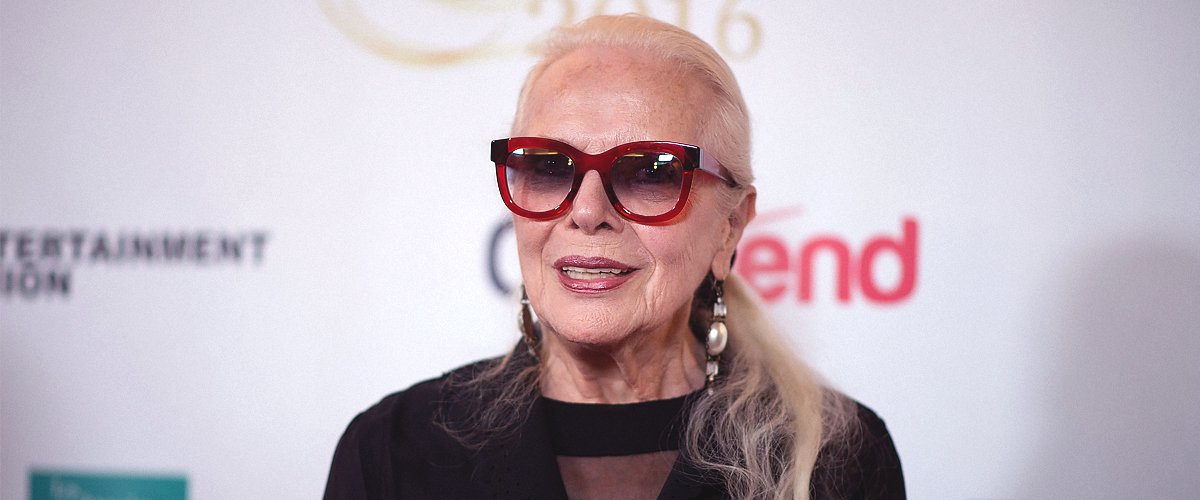
You began your artistic journey by taking dance classes. How did that path lead you to study with the legendary Martha Graham in New York?
Well, I started dancing at the University of Illinois, primarily to get out of the gym. I walked down the hall, and I found this dance class that was just so amazing to me. I had never been exposed to it. It was my first love. So I went back that summer to Chicago and started taking classes. I found my way to various different teachers, and then I found out about Martha Graham and thought, "I'm going to New York." So I took my—I don't know—100 dollars, with my hair tied up very tight, and I went there. We were modern dancers; we didn't talk to the showbiz kids. Very funny, really, if you think about it. So, I studied with Graham and a number of other wonderful teachers at that time in New York. But pretty soon, it wasn't as exciting.
How so?
The field became difficult. We were dancing for each other up at the YMHA, because the whole explosion of dance had kind of calmed down. And so I was getting very sad. It's hard to have a broken heart over one's first love. And people kept saying, "Come to an acting class." I would say, "I'm not an actress; I am a dancer." But I went to one class, and I fell in love all over again. I had never imagined myself as an actress. I wasn't one of those kids who entertained the family; I was one of those kids who sat in the corner and read all day long. Today, they would call me a nerd (laughs). They called us bookish. All I did was read—in Chicago, in the dark, or at nighttime—all these wonderful, wonderful books.
I imagine that was quite a catalyst for your imagination...
Exactly. I realized later that—didn't I play all those characters when I was reading them? All that stuff sort of served as fuel for the actress in me later, because—wasn't I, Anna Karenina, standing in the train station, waiting for him to come, and he doesn't show up? All those very, very passionate novels. I read a lot of fiction—just everything that had print, even the milk carton.

Before getting into acting, you spent some time modeling for Vogue and Harper's Bazaar. What drew you to that world?
It sought me out, and it was wonderful, because I was able to pay for class. I learned a lot about how clothes are made, what to wear, and all of that. But the work itself wasn't anything I was going to attach myself to the same way. I didn't have a passion for it. I just was very lucky to be able to do that, because it paid my way. And I was, you know, always paying my own way.
How do you remember your time being instructed by Lee Strasberg at the Actors Studio?
I spent about a year and a half in Lee Strasberg's class. I tried to get into his private class—and I did—which was not easy to do. I had to go, and he sat you on a stool, walked around you, and scared the hell out of you. I knew that he was a very brilliant teacher; I'd heard all of that. But I spent a year and a half in all these different classes because I knew I didn't know how to do it. I was not a born actress. What do you mean, "walk and talk"? Oh, I was just scared. But when I went out for the first three auditions, I got all of them. In just one week, I got a Broadway play, a television show, and a live television show. It was one of the last things done "live from New York."
Around that time, when you were doing the modeling, you signed up for acting classes, where you met Martin Landau, who would later become your husband. What were those initial impressions of each other?
He was the best actor in the class, and they'd get him up first to show all the rest of us, who didn't know what we were doing, what we were supposed to be doing. I mean, he thought I was a model—you know, easy to be dismissed as a blonde model. And I thought he was a wild person. But he was very attractive because he was young and crazy, and so was I at the time. And that's where we kind of found each other. We started hanging out, and pretty soon we got married. And that tour we did from New York—all 26 cities across the country—was our honeymoon.

What was that tour like?
We were two actors getting paid, thinking, "Wow, this is very exciting." And we were saving our money, taking our dog, and going across the whole country, being very well received. Then the play ended in San Francisco, and then Los Angeles. Television was burgeoning here; it had just started, and nobody knew what to do. The studios were very frightened, like they are now. It was another kind of moment where technology had changed everything, and the studios were grappling with what to do. Meanwhile, they started producing television and said, "Oh, this works. We make money on television." And we were here.
Were you able to get roles right away?
Martin was immediately cast—one role after another—because there were 26 Westerns on the air at the time. And he could ride a horse (laughs). But that was a good thing. He had ridden a horse in New York, Eastern-saddled, but he learned fast what to do here. They wanted New York actors because we could learn dialogue—or so they thought—and that was true. So we both started working, one show after another.
In 1959, you landed your first recurring role on the series Richard Diamond, Private Detective, playing David Janssen's love interest. Did you feel prepared to work in television during those early years?
I was totally frightened. Martin immediately adjusted to film—he understood it fast—but I struggled to understand the limits of it. All of it was almost overwhelming, but I'm a fighter, and I hung in there and learned, sometimes at other people's expense, meaning I really didn't know at first how to deal with film. At that time, you couldn't make certain things, you couldn't talk over another person, and there were different requirements in the sound department. Now, when some of those old black-and-white shows show up, I go, "Oh, I was okay. I wasn't so terrible." Anyway, then I was working, working, working. I must have done—I don't know how many—television shows before Mission: Impossible.

How did Mission: Impossible, the acclaimed 1960s TV series, get underway?
Martin started teaching here in L.A. There were a lot of New York actors because of all the work. So he included writers, because he wanted them to see what actors did. He got the writers up on stage, and most of them were absolutely terrified of being in the spotlight. One of those writers was Bruce Geller. He wrote the pilot for Mission: Impossible for Martin—he wrote that part for him. Then he suddenly realized that he had written the girl for me, but he couldn't promise it to me because of the networks; everybody had to decide. So I went to a bunch of auditions, and I was getting called. I kept going in. The last person I had to audition for was Lucille Ball, because she owned Desilu, where the show was being produced.
What happened during that audition?
I was scared, and I walked in. This was our meeting: she looked me up and down and said, "Looks okay to me." That was it (laughs). I left, and I got the role. It was fabulous.
How did Bruce Geller's role influence the production of the series?
Everything about that production was wonderful because Bruce knew what he was doing. He was incredibly meticulous. The scenes were very worked out before they came on set. It was a very pressured shooting situation, but we were all young, game, and excited about it, so we went one after another. You know, we'd get the next script the day before we'd shoot it. Only once did I read something and said, "Oh, I don't think this is right." So I went up to the writers. They were on the second floor of the building. I walked in to ask about this, and they said, "Oh, I'm paying so-and-so. That's an old script," before I even asked the question. They were so tight, so well organized. We were in good hands, is all I'm saying.

Why was Steven Hill fired from the show?
Well, there's a lot of rumor. Most of it is not true. Steven had become very religious during the time of Mission: Impossible. He was a very gifted Broadway actor with an extraordinary reputation. Bruce knew that he had to leave on Friday night and wanted him anyway, so there was no conflict over the religion. Friday night is the time you're catching up for the week, so you do go late often, but we did not. There was just a general kind of difficulty. I don't think he was happy at that moment in life, and he wasn't terribly easy to get along with. We all kind of, however he was feeling that day, dealt with it. But after the first year, I guess Bruce said this wasn't as good as he thought it would be, and he's the one who changed it.
Did Peter Graves' addition work out well?
When Peter came in, in an odd way, that just worked very well. Peter was a really fine, hard-working man. He wasn't a kid—he was a grown-up. We were the kids (laughs).
Lalo Schifrin, the Argentine composer of Mission: Impossible's main theme, passed away recently in June. How much weight did his music carry in the success of the show?
His music was so important to us. He was like another member of the team. And, in a way, when you think about it, that music really made the series—because it was so good. I think that music just made it into something very special. And I'm, you know, very sorry that he passed away. When they put a star for Lalo on Hollywood Boulevard, we were there, and he said the only thing he brought with him to America was his dreams. I remember him saying that. He was a sweet person.

How do you recall your experience working with your husband, given that it's quite an unusual situation for an actor?
Yeah, but that was very easy for us because we cared about the craft. We cared about the acting very much. We didn't have to say, "What did you do today?" I mean, we just knew. Of course, we didn't have cell phones like everybody does today, and they catch up with each other all day long. No, most people came home, and they'd be like, "What was your day like?" Well, we knew, so we didn't have to do that. And the work situation was always kind of understood. We had a rule: be kind to whoever is working. So that meant the other person would take care of the dog or whatever, you know—we kind of helped that work. And it did. So that was not a problem.
Do you have a favorite episode or a storyline from your time on the show?
Everything I've ever done at that moment—I can't pick one. Though, of course, the three I got Emmys for have a certain resonance, no question. But every one had its own challenges. I'm sort of a puzzle-solver person by nature, and I like to solve it in every character I play. It's very exciting to me. I'm still acting and directing now, which I hadn't done before, and my question is always, "Why am I here? This is a good script. I can stay home and read it. Why do they need me? What am I supposed to do? Oh, I'm going to bring something more than what's here. And what could that be? I don't know..." But it's fun to go through all that process.
How do you reflect on the impact that your empowered female character, Cinnamon Carter, had on the women who watched the series?
That was and is totally amazing and wonderful. I get letters from women who write and tell me, "I had the courage to join NASA, and now I'm retired, because a whole lifetime has gone by." And that's very moving. You know, when I first came here to Hollywood, and the way things were done in that era, our opportunities in terms of women were very limited. You were supposed to be a secretary, a teacher, a housewife—obviously, that was our golden path. In Mission: Impossible, I was the woman with the guys. I was their equal—equal in intelligence; that was the difference. She was an intelligent woman. I played a lot of dumb blondes up until then. I've never been a dumb blonde, but that's what I had to learn to play, and I did.

I can't imagine how boring and repetitive that must have been. How did you manage it?
Yeah. I had to find each one a little different so I could have the kind of creativity that I needed to do the work. But then, all of a sudden, Bruce said, "Look, she's a smart blonde. Oh, wow, what do we do with that?" So it did shake up a lot of thinking, and it did inspire a lot of people, and that's overwhelming to me and means a lot—and you're kind of not aware. How could you be aware of the impact of television? It's stunning. Well, you know, look at us—I'm talking to you, you know.
After three successful seasons, both you and Martin left the series. While many believe it was due to salary issues, it seems it was more related to contractual matters. Could you clarify what happened?
Well, what was put in the press wasn't true, again. But a year later, a TV Guide writer came to reiterate the same story—and instead, he actually wrote what really happened. It was painted as if we held them up for money, but we never had a money conversation. It had nothing to do with it. The other problem was created by what Paramount brought to the show. They were bought by somebody who was a manufacturer, I believe, of tires. So a lot of the ideas of how to make a show—because they didn't know—didn't work. And then they had to change them. So all that was going on. But on top of it all, Martin and I were never represented by the same agent at all. I never had a conversation with them about my situation, ever.
So, what you mean is, you had different kinds of contracts, right?
He only had a year-by-year contract. They didn't like it and wanted him to sign on for another seven years. He didn't want to do it because he wanted that freedom that comes with having a year-by-year contract. It had nothing to do with me. But they made a bad assumption that I was joined up with him—and I wasn't. Anyway, I got caught in that.

But the thing is, in your case, you had contractual obligations. Did it prevent you from working on other projects?
Yes, they gave me what was called a forced wardrobe call. We were going to shoot starting the next day, and they knew I was doing a public service ad for the government. They had make-up people from the show there with me, so they knew where I was. They knew I couldn't be in two places at once—even Cinnamon Carter couldn't do that (laughs). So they gave me a "you gotta be here or else." And then they sued me for breach on the night that I won the last Emmy. It was a very difficult night for me. They put an injunction on me and kept me out of work for a year. I was in litigation. I thought, "Why am I in litigation? Oh, they have a big law firm on retainer." It was tough.
After that, you received an offer from the UK. It was between 1975 and 1977 that you reunited with your then-husband to star in Space: 1999. How were you asked to be on the show?
Well, Sylvia and Gerry Anderson came here and asked to have a meeting with us. We met in our home. It was fun because of the concept that they were presenting, which sounded very intriguing. Also, Sylvia said the only designer she was interested in was somebody named Rudi Gernreich. And I said, "Well, Rudi's an old friend of mine." We knew each other when we were both just starting out in New York. We met in the office of Harper's Bazaar. I was being seen as a model, and they were looking at his clothes. And we hung on to each other—a very sweet, beautiful person, very gifted. By the time we did the series, he had already retired. And we asked him at the time, because this was a show going into the future, what he thought we'd be wearing in the future.
What was his response?
Rudi, who was much more a philosopher than a designer, said, "Armor. But I can't put you in armor. You can't act in it." But that was what he said then. And look where we are now—it's a little scary. Anyway, that's how it happened. We considered the kids, school, and what we were going to do. We said, "Oh, we're going to London. Well, all right—let's make an adventure." We'd be out; we would shoot till 5:20 every night. I don't know what the shooting schedule is now, but I was home for dinner, which was very important for me because I didn't want to miss those years with my daughters.

What were the key differences between filming Mission: Impossible and Space: 1999?
Basically, the clarity that Bruce Geller had about what he had in mind. With the Andersons, they were trying to find the formula, so it was a little different in that aspect. The writers in England were fabulous, but they weren't used to those commercial breaks on American television. And though this show was not made for American television, it was made for universal television, which was fascinating. They didn't want to limit it to the American market, so it was sold in about 80-some countries. But it still needed the rhythm of television.
In which ways were they not accustomed to the commercial breaks?
Most of the wonderful English screenwriters coming up would do a proper development of a script to a peak, then a denouement, and then the end. Well, with commercial breaks, you've got to break it up into—I think it was 12-minute segments or something like that—with a cliffhanger. You know, we ended up having a little more responsibility in that regard than we needed. We weren't needed in the situation with what Bruce set up. They did their part; we did our part. Here, it became much more about trying to find our way—all of us—in it. But it has become a cult series loved all over the world. And I went to Las Vegas in August for a panel discussion at a Star Trek convention—a very nice invitation.
A fun fact, going back in time: in 1961 and 1962, you lived in Rome during the filming of Cleopatra, where Martin had a significant role. There, you witnessed one of the most famous romances in entertainment history—between Elizabeth Taylor and Richard Burton. What behind-the-scenes details did you observe there?
I'll tell you a funny story. We traveled with a baby. I had to learn all these baby words in Italian to try to find my way through young motherhood with an infant. Now, nothing could be better—the Romans are great with babies. Meanwhile, Martin took a picture of Susie on the Roman Forum. She took her first steps in life there. Later, he went to the set, and for some reason Richard and Elizabeth kissed on the set, and Martin took a picture quickly before heading off to film. The whole city wanted that picture. So we didn't have it developed for however long it was until we got back here, because it would have been stolen in the lab. All we wanted was our baby picture. Anyway, we have it. Elizabeth, Richard—fine, thank you. You're grown-ups; do what you want.

Any other memories from Rome?
Well, one of the most extraordinary people I met there was Fellini. Federico Fellini was fabulous. I spent some time with him.. He was interested in Martin for 8½, I think. But Martin couldn't do it because he was filming Cleopatra. He kept yelling at Marty (laughs), and he was very funny and very sweet. It was very exciting to meet him.
From the 1980s to the present, you've made multiple guest appearances on popular shows like Moonlighting, Murder, She Wrote, and CSI: Crime Scene Investigation. Looking back, is there one that stands out to you in particular?
No. I can say every one is precious. The one I did last year with Billy Crystal was very special. They all are. With each one I take on, I get very deeply involved, so I don't know how to separate one from another. I really don't. They're just like your children, I guess. I think when they cut me open—if they ever do, for whatever is done at the end of one's life—all these people that I've harbored all this time are going to come out (laughs). All these characters, all these colors, all these different events. You know, I love doing comedy. I'm not necessarily known for it, but I've done a lot of it. Also, a lot of those variety shows that were done at the time. Every once in a while, something pops up, and I think, "Oh, that's pretty good." It's quite a career I've had.
More recently, you participated in On the Rocks, directed by Sofia Coppola. Can you share your thoughts on filming that movie?
Well, she's just lovely. The shooting was great. It was well-received and got some nice notices. It's just a small part, but Susie, my daughter, has been very involved with Francis Ford Coppola for many years. She worked with him on a number of major movies, and she's been around Sofia all her growing up. That whole family—she's very close to them and knows them much more than I do. So it was sort of my little, "Oh, okay. I'll do something with them, too." I did one picture with Christopher Coppola—funny, funny picture. So it's a Coppola connection, I guess. And I enjoyed it.

You created the programs Book Pals and Storyline Online, through which you promoted children's literacy by having different actors and personalities read stories to children. What motivated you to get involved in this cause?
Well, my relationship to books as a kid meant everything. There were two things that formed me when I was young. They were both public institutions. One was the library, and the second one was the Art Institute of Chicago, which I discovered when I was around eight or nine. I went there every weekend and just sat, looking at this wondrous world of things. I had no idea why I was there—none. But the part of Chicago I lived in, and Chicago itself, was kind of harsh, dirty, and a bit rough—not pretty. So I was like, "Oh, look at this stuff." I found something wonderful in the world that I wouldn't have noticed. Same thing with the library.
When did you first come up with the idea?
The idea came when I was playing a board game with one of my kids. It was called Personal Preference. Each person got about four cards, and they said things like "peanut butter sandwiches" or "flying a kite," and you were supposed to pick which of those you liked. I didn't pick reading to children, and my kid said to me, "Wait a minute, I didn't run up those points, because you should have picked reading to children. You've always said you loved that." And I said, "Yeah, but you guys grew up in 10 minutes. I don't have any children to read to now." The next day, I kept thinking about it. I said, "Yeah, why not do that?"
Where did you think would be a good place to start?
The first thing I thought was, "I'm not going to go to the library, because the kids who are in a library already know it exists. What about the kids who don't even know there's a library in the neighborhood?" So I went to this park in Venice and volunteered to read at a day camp. It was a big mix of kids' ages. I sat in the grass with them, and one boy was kind of thrown to the ground, saying, "I don't want to hear no story." I said, "Okay, let's see what happens." So I read the story, and afterwards he came up, pretending like he wasn't talking to me, and said, "Do you have any stories about whales?" I said, "Oh, is there a story about whales? You'll probably have to wait until high school. Yes, I'll tell you the name of it. You can get it and try to read it."

How did that first interaction with the kids translate to the actual program?
I went to the mayor, Tom Bradley, because I knew him. I said to him, "I'm not asking you for anything. I'm bringing you something. Are you interested in this?" I also went to the Screen Actors Guild and asked them too. Got it all together. The mayor walked me right down to a woman named Carla Sanger, who ran an after-school program for the city. We were up in two months. To get something done in a big city in two months? Unheard of. So we were reading to kids pretty much all over the country, and then it expanded into the technological age. Now, they say it has something like four million hits a month worldwide. It's just amazing and important. It's important because of my own experience with books. Books open the whole world up to you, no matter where you are.
What have you been up to lately?
I've been directing a lot. I had a wonderful play called Gruesome Playground Injuries. We developed it at the Actors' Studio and took it to a theater. Wonderfully reviewed. It had a good run—totally sold out. There's always something I'm directing somewhere in the little theaters here. I did about 15 years of directing with the Young Playwrights Festival with really young kids—20 considered old. Some of those plays have gone on to Broadway. Working with kids is interesting; it's fascinating to see what's on their minds. Well, it's pretty much the same stuff that everybody's always been concerned with: sex, love, disappointment, betrayal, peace, war... but interestingly treated by different people. The kind of variation in material that shows up is just so impressive.
I can see you're still very active. Do you have anything planned for the near future? Maybe something you want to achieve?
Well, no, I've never been a planner. But I'm great at—and always have been since I was a kid—taking whatever shows up and making something out of it. I'm good at that. So many good things have shown up since I was a little girl, really. So, that's a gift in itself. I mean, if it's not good, I just don't deal with it. But if there's some possibility in it, okay—let's make something out of this. And I like that. I'm not bound by any expectation; I never have been. It's all been, wow. I have no complaints.
Is there a final message you want to give to my readers?
Well, if only I were in charge of anything that's having an effect (laughs). Be good to each other more than anything else. We're in funny times—it's not an easy ride. See what happens next, certainly for the arts, and a little for everything else. A difficult time for me to see again—let's put it that way. So, yeah, just hang on to each other and hang in there.