
Your first significant steps were on Broadway with Forty Carats. How did you manage to break into the world of show business with this project?
Wow, that's a long time ago. I was just out of school, and I heard about Forty Carats, so I auditioned for it, and they cast me in the lead opposite Julie Harris. Working with her—one of the most respected actors in theater—was a joy. I did that play for 18 months on Broadway, and it was wonderful.
At one point, the leading role was taken over by the controversial Zsa Zsa Gabor. Can you share the story about her wardrobe malfunction?
Oh, yeah. Zsa Zsa was doing a wardrobe change behind the scene while I was performing at the front of the stage with another actor, and the curtain went up, exposing her undressed as she was changing into a new costume. Of course, she let out a scream, and the audience loved it. They applauded, and it was the highlight of the performance.
Speaking of Broadway, you had the opportunity to star in Victor/Victoria with the legendary Julie Andrews in the mid-'90s. What was your biggest takeaway from that experience?
It was a pleasure to work with her and her husband, Blake Edwards, as well as the wonderful cast. Julie and I had very good chemistry. There was a period when she had to rest her voice, so she was replaced by Liza Minnelli for about six weeks, and that was wonderful. I loved working with Liza, an exceptionally accomplished actress who brought her own interpretation to the role. Overall, the experience of Victor/Victoria remains one of the most joyful highlights of my career.

Going back in time to the early '80s, one of your first major roles in a TV series was in 1981, when you played mobster Lucky Luciano in The Gangster Chronicles. What do you think was the main factor in your being chosen for the role?
I can't really tell you what the deciding factor was in my being cast. It was a great opportunity. I did a lot of research. I spent three months traveling from New York to Miami to Rome, talking with people who knew the real Lucky Luciano for this CBS series. I worked with a marvelous group of actors and directors. We had a very good 13-episode run, and it was very successful.
This wasn't the only time you were called to play real-life characters. Among others, you portrayed playboy Porfirio Rubirosa and baseball player Joe DiMaggio in different TV movies. What do you think is the best part of portraying non-fictional characters?
Well, I enjoy portraying non-fictional characters because, in some cases, there might be an opportunity to meet the actual people you're portraying. With these two in particular, I did not meet either of them, so I just had to do research. I really enjoyed playing Joe DiMaggio, and I'm one of the few actors who has ever played him. Rubirosa was a very colorful character to portray, too. Both of those projects were a lot of fun.
You said you do a lot of research. Do you also take some creative liberties when creating the characters?
I don't take creative liberties. I mean, we stick to the written script. I'll have conversations with the director about it and about the character, but no, I would not call it creative liberties. I don't believe in taking liberties; I am respectful of the material.

Talking about real-life characters, how was your experience portraying Norman Blachford, Andrew Cunanan's lover, in The Assassination of Gianni Versace: American Crime Story?
That was the first of three Ryan Murphy-created projects I've worked on. It was a fantastic experience, with good writing, and, again, I was very fortunate to be cast in that show. Also, there were some very nice actors. I worked one-on-one with Darren Criss. He's very talented, and we had a good time working together. I thought his performance was very impressive.
What were the other shows where you worked with Ryan Murphy?
I worked on a show called The Watcher with Bobby Cannavale and Naomi Watts. Most recently, I worked on his new series, which just came out on November 4th, called All's Fair, with Glenn Close, Naomi Watts, and Kim Kardashian. In the latter, I shared scenes with Naomi and Kim. Kim was fine—we had one scene together, and it was a very good one, I must say.
What do you think differentiates Ryan Murphy from the rest of the producers you may have worked with in the past? What do you think makes him special?
He is a wonderful writer. He creates very interesting and unconventional characters, and he pushes the envelope. He is not conventional at all. He has a unique voice in all of the projects he does, and it's always a lot of fun performing in his shows.

Going back in time again, in 1983, Flashdance was released, where you played what is probably the most memorable character of your career, Nick Hurley. Who offered you the role, and how did your involvement come about?
Well, I had a meeting with the director, Adrian Lyne, and after our meeting, he offered me the role of Nick Hurley. I was thrilled to be cast in that movie because I really liked the plot. It was an absolute pleasure to work with such a wonderful man and director.
Are there any interesting anecdotes from the filming of the movie?
Not really. I think the movie speaks for itself. There was nothing controversial, no scandals. No, it was a very happy production. I think we all enjoyed making it, and we had no idea that it was going to be as successful as it was. So, when it opened and received the global reception that it did, we were all blown away by its success. It was the only time I have ever seen an audience give a standing ovation for a movie. They loved it so much that everybody in the audience stood and gave it an ovation at the end.
How did that impact you, considering it was your first major film role?
Well, the success of Flashdance certainly created other opportunities, which was great. It's very rare that a movie can be that successful, and when it is—especially globally—it's incredible. I mean, it took me around the world when we were doing press junkets. I love traveling, and it gave me the opportunity to do that and to meet a lot of great people. Yeah, overall, it was a really good experience. And I think it was about 40 years ago. That's a long time.

Was the age gap between you and Jennifer Beals a challenge, or did you find a way to work around it and still create the chemistry needed for the screen?
Well, chemistry is something that's either there or it's not. It's not something that you can create. The age difference was not a factor in the plot of the film. It's not something that we focused on as actors. You know, we were just telling the story.
Before the release of the film, did you anticipate the level of influence the soundtrack would have on its success, with hits like Maniac by Michael Sembello and Flashdance... What a Feeling by Irene Cara?
We had no way of imagining the success that the movie would have in terms of music, wardrobe, and breakdancing. They were three aspects of the movie that were revolutionary.
You just mentioned that doing Flashdance opened a lot of doors for you, but I've also read an article where you mentioned your career didn't flourish as expected after the massive success of that film. What did you mean by that?
Well, what happened was, after Flashdance, I was hired by a wonderful director named William Friedkin to star in his movie at 20th Century Fox with Barbara Hershey, and, unfortunately, the movie was cancelled. So, I did not get to do it and work with that great director. But I went on to do other things, though.

What about the series Bay City Blues that aired between 1983 and 1984? I understand it only lasted eight episodes. Do you think the competition with a successful show like Hart to Hart, which was already well established with the audience, played a role in its short run?
Bay City Blues was fantastic. I had an amazing time working with the creator, Steven Bochco, and I met actors who, to this day, are some of my dearest friends. In terms of how long it lasted, I can't speak to the longevity or lack thereof of any show. These factors are due to reasons I do not know.
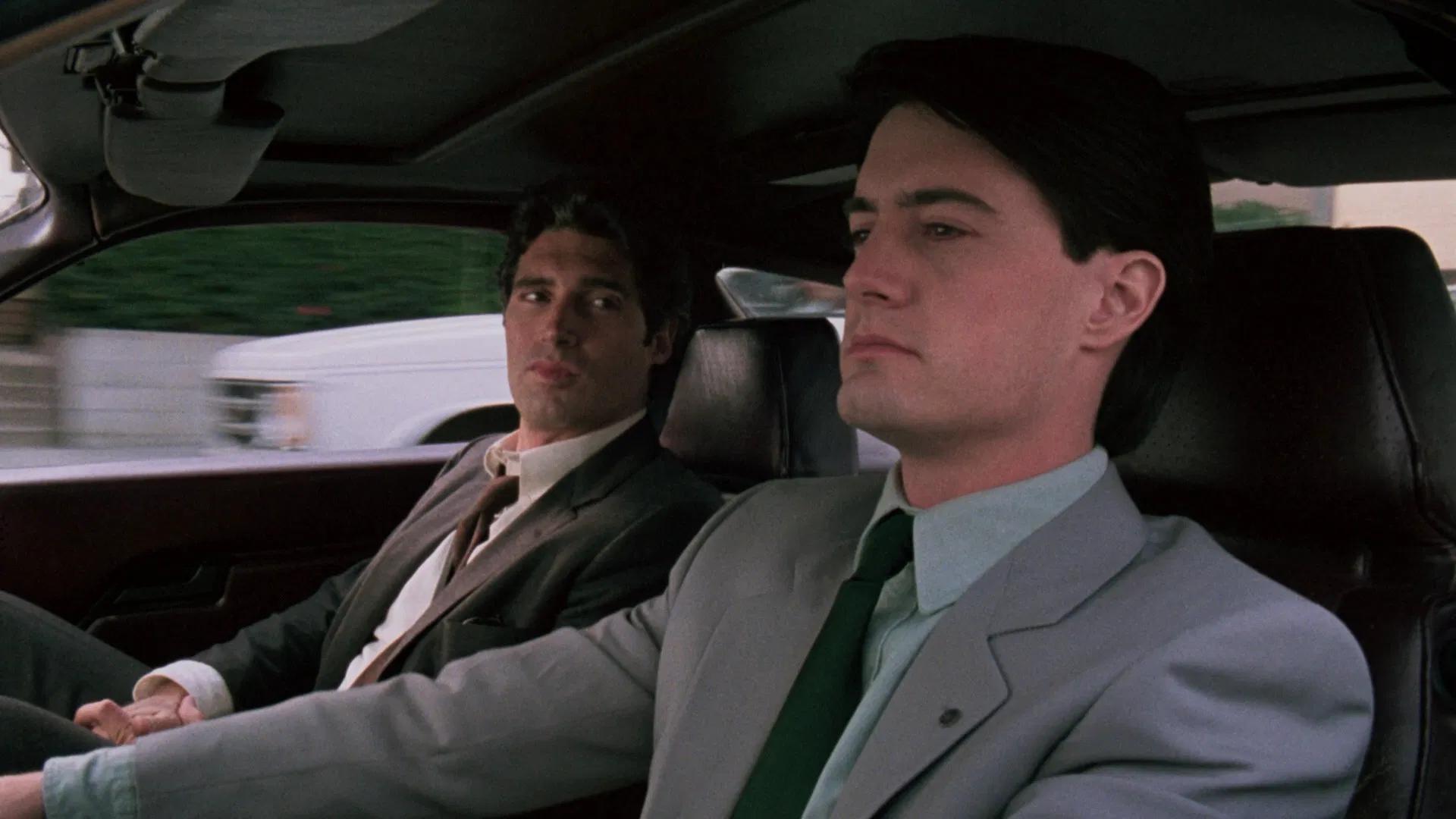
In 1987, you starred in a well-remembered film called The Hidden alongside Kyle MacLachlan. What do you remember about filming it? Did you say yes right away when you read the unusual plot, with its unique blend of thriller and science fiction?
I had no doubts—no reservations about getting into that project. Kyle and I were friends, and we really enjoyed working together on this very fun movie. Once again, we had no idea—no way of predicting the success of that film, which, to this day, is one of the most successful science fiction movies ever made. The only part that I didn't enjoy at all was night shooting, because you're filming all night into the wee hours of the morning. Apart from that, it was great; I received an award at the Sitges Film Festival and was also nominated for a Saturn Award.
Talking about awards, you were nominated for an Emmy for Search for Tomorrow in the '70s. How do you recall that moment?
I was delighted. It always feels good to be acknowledged that way.
What was it like being directed by Steven Spielberg in The Terminal?
Well, it was a thrill to work for Steven Spielberg and with Tom Hanks and Catherine Zeta-Jones. That was an unforgettable experience. I especially enjoyed kissing Catherine Zeta-Jones (laughs). She was coming up an escalator, and I was at the top waiting for her. I picked her up, spun her around, and kissed her. Steven Spielberg said, "That's great." And I said, "Steven, I'd like to do another take. I think I can do it better." Only because I just wanted to kiss Catherine Zeta-Jones again.
From 2004 to 2007, you had a prominent role in the successful series The O.C. Did you expect this kind of resurgence later in your career, at a more mature stage of life?
That was a fun character. I enjoyed it. Once again, the bottom line is that I love to act. I love everything about it—whether it's stage, big screen, or television. I love it. I was passionate about acting from the beginning, when I was young, and I always have been. But that passion grew over time as I got older, you know.
In the years that followed, you had the chance to play recurring roles in several notable TV series, including Damages, NCIS, and Yellowstone. Is there one role that stands out to you in particular?
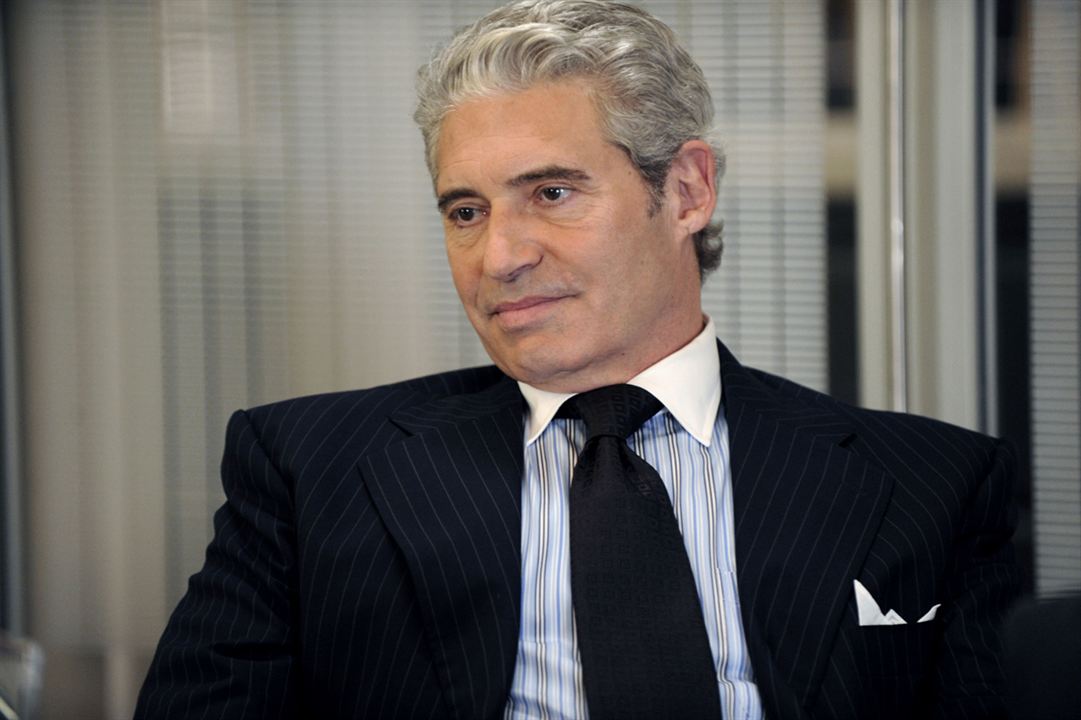
Yes, I think playing Glenn Close's husband in Damages was a highlight—a very special opportunity to work with somebody of her talent and stature. So I would say that one really stands out. I also enjoyed working very much with Taylor Sheridan on Yellowstone. I did not have a long contract on the show, but it was a lot of fun working with Kelly Reilly. All of my scenes were with Kelly, who is a brilliant actress. Also, on NCIS, playing Eli David was a character that I very much enjoyed because I had to really create a character from scratch. To this day, it's still very popular among audiences and critics.
What does creating a character involve? What is the process like?
Well, it depends on which character you're talking about. If it's a biographical character, there's a lot of research that can be done. In this case, even though I wasn't portraying a real person, I did a lot of research about Mossad because I was playing its director. I also had to come up with an Israeli accent. And that was pretty much it.
Is it true that even today, with all your credits and years of experience, you still audition for some roles?
Yes, I still have to audition because the business has changed dramatically. There are times when I will audition for certain projects, which I'm very happy to do. But it depends on what the project is. My decision to audition—or not—depends exclusively on the director and the material.
What have you been up to in recent years?
Well, aside from the projects we've talked about—Yellowstone, The Watcher, All's Fair—I've also done voiceovers for certain products. I did a TV series in Rome a couple of years ago with Patrick Dempsey called Devils, which was wonderful—being paid to be in Rome for two months! I love to travel, you know. But generally speaking, I live a pretty quiet life here in Los Angeles, at home with my family. That's how I've spent the last couple of years of my life.
Do you have any personal or professional projects planned for the near future? Something you want to achieve next?
Yes, I'm writing a memoir because I want to record my life for my family—for my children and my grandsons. I want to leave something for them, sharing about my wonderful life.
What can people expect from the book?
They'll see when it's finished, because I'm not finished yet. But it's going to talk about both my personal and my professional life, of course. It would not be a meaningful memoir without discussing my personal life. But also, it would not be at all interesting if I didn't talk about my professional life, because one impacts the other—they are integral.
What would be your final message for my readers?
Well, I would like to say thank you very much. I would not be where I am without an audience. I'm glad that your audience and my audience appreciate the work I've done over the past 50-plus years. It's been a long, wonderful ride, and it's not over yet.