
In the late 1940s and early 1950s, you attended Northwestern University, where you graduated in 1951. That's also where you met your future husband, William Daniels. Was it love at first sight, or did the connection grow over time?
No, it was pretty much very fast. I mean, it felt slow because, you know, it was normal. But it was—I would say—almost that. Not love at first sight; maybe love at second sight (laughs). We worked together on a show, and when we were at that rehearsal, that's when he first said, "Do you want to go out for a cup of coffee?" And that's when it started. Then I did a very big part at Northwestern and won the acting award, which was very special because it was my freshman year. By then we were hooked—really hooked. And he was very helpful to me, and I became very helpful to him, because he didn't know how to study and things like that. He hadn't had any schooling.
Is it true that Paul Lynde was one of your classmates as well?
He was a senior when we were freshmen. As a matter of fact, I went to a party at his fraternity before I met Bill. Anyway, he was famous for being very funny and very good.
Early in your career, you crossed paths with Marilyn Monroe while both of you were studying with Lee Strasberg. What was your impression of her at the time?
She was a very nice woman. I liked her very much. She worked hard and paid a lot of attention. She really wanted to be an actress who could do much more than what she was doing. But it was hard because she was so good at what she did, you know. Lee and she thought she could go on to do all kinds of other things. It never worked out, but he was definitely her mentor—father figure, all of that. She left everything to him when she died.
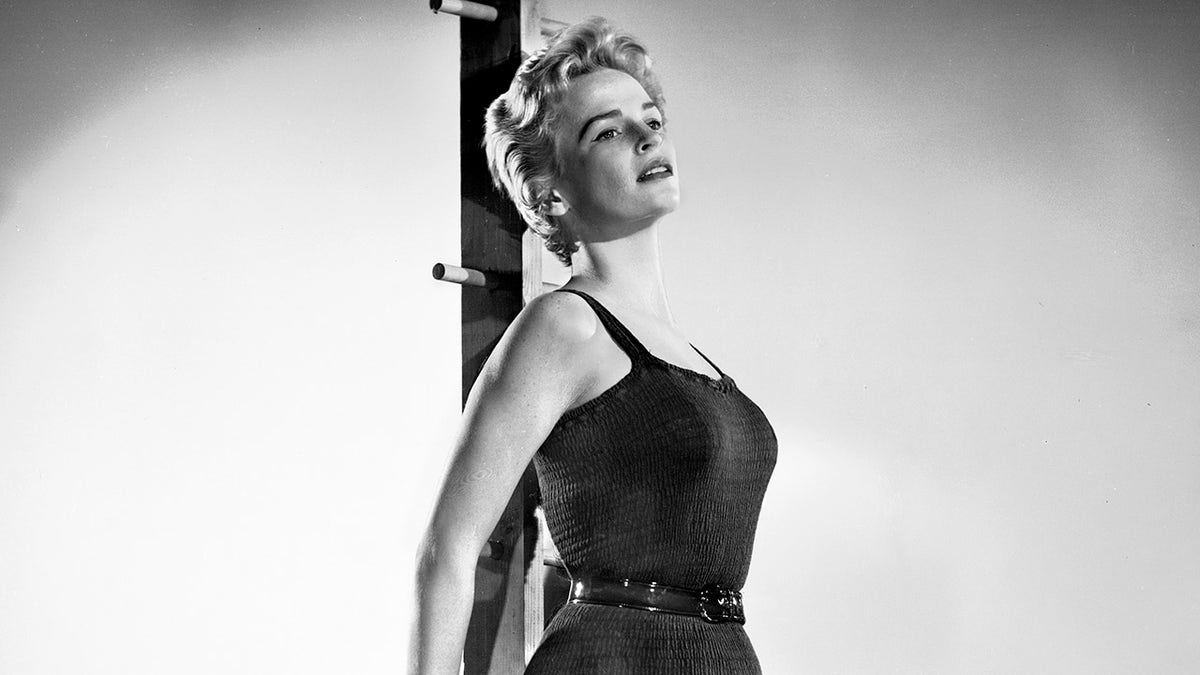
Were you shocked by the news of her tragic death in 1962, or did you sense it was something that might happen?
I wasn't shocked. I was just very, very sorry. I thought it didn't have to happen. I mean, she had a very good therapist there in Santa Monica, and I thought she was doing okay—but obviously she wasn't. No, I think she, by mistake, killed herself. By mistake.
Going back to Lee Strasberg, what was your experience with him like?
It was good and bad. He was extremely insightful—he could figure out very easily what your problems were as an actor. But sometimes he could be cruel and tough. He was a cold, cold man.
Around that time, in the late 1950s, you had a recurring role as Vanessa Dale on the soap opera Love of Life, taking over from actress Peggy McCay. Can you share how you got that role?
I got that job after many, many auditions because they wanted a much better-known person. But the director really wanted me. So I just auditioned and auditioned and auditioned, and then I got the part. I was there for three and a half years. It was a very good learning experience—not a great acting experience, but a very good learning experience. In those years, soap operas were done live, before they had tapes and stuff like that. If you can do soap operas and do them live like we did, boy, you can do anything (laughs). It was a lot of work every day.
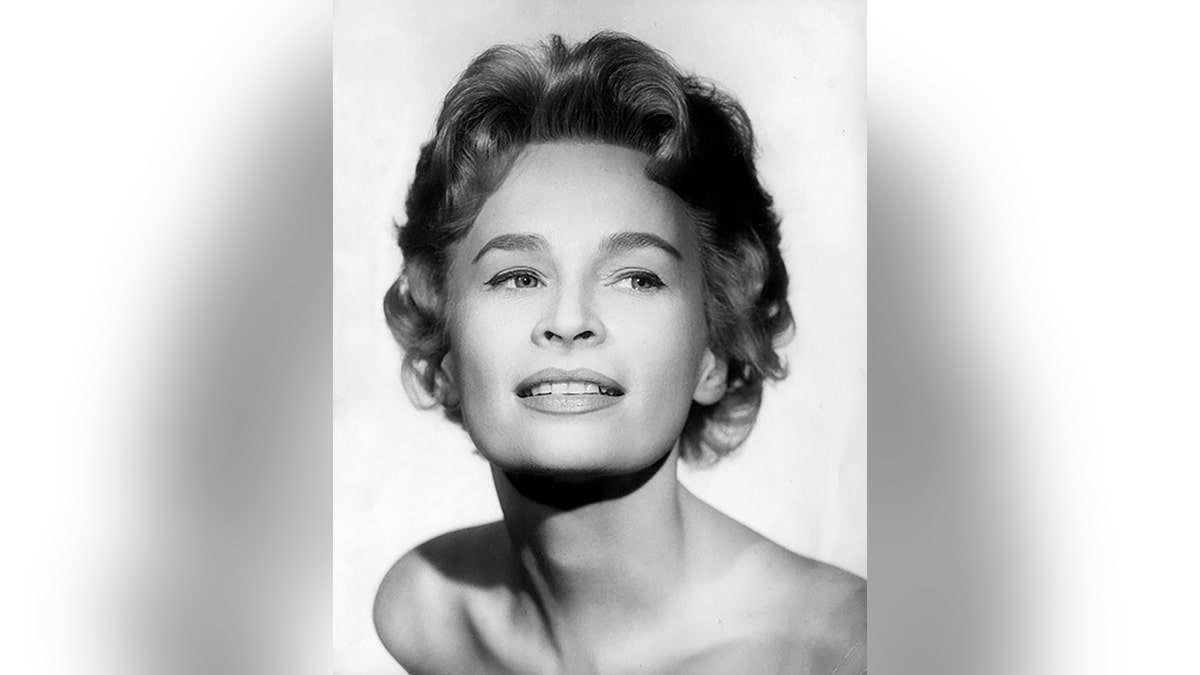
Why did you decide to leave Love of Life?
I didn't want to do that. I wanted to try to get something better. I very much wanted to work in the theater. I mean, I did television and so forth, but I did a lot of theater, and I was very happy doing it. I did a very good play a little later that Lanford Wilson wrote, called Lemon Sky, with Christopher Walken and Charles Durning. It got a lot of good reviews. I loved doing theater, I have to say, but it was hard—much harder.
While it was an important early opportunity in your career, you've spoken about being sexually abused by a male actor who was part of that show. What was the healing process like for you?
He wasn't my main co-star, but he was an actor who was on the show as a regular for quite a long time. I had an abusive father, so this was the next bad thing. It really leaves you with a bad feeling about yourself. But I had good therapy to help me. At that time, I could not express my hate; I couldn't express my anger enough. I mean, I might have killed him, and that wouldn't have been good either. No—definitely not—but that's what you feel like doing.
Why haven't you disclosed his name?
Well, I didn't want to hurt any of his living relatives—I mean, somebody he was involved with or something. I didn't want to. I have told some people; a lot of people know who it is, but I didn't want to put it in print.
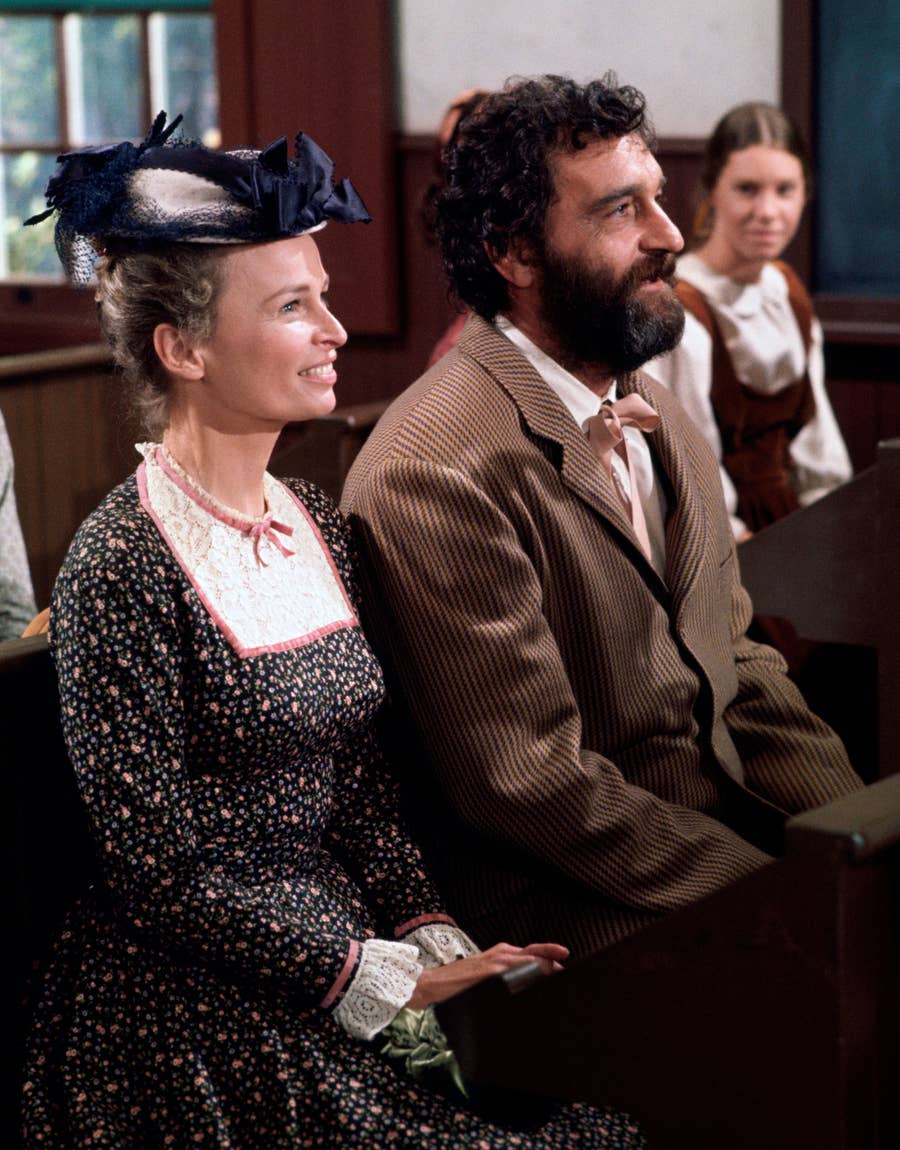
On a lighter note, one experience you've described with joy and gratitude is your time on Little House on the Prairie in the mid to late '70s. Is it true you were handpicked by Michael Landon himself?
Yes, I was just sitting in a general audition, and he hired me that day for this part. I just happened to be perfect for the role that was coming up, and that's it—I got it like that. He was a lovely person on the set. He was really the boss all the way: he was the writer, he was the star, he was the director. And he would work with me as a director a little bit. He didn't do that very much, but if I said I thought something should be different, he respected me enough to listen to me and work with me, and that was good.
What about your relationship with Victor French, your on-screen husband?
We had very good chemistry because he was funny, he was a tease, he played games—you know, he just liked to fool around. And so that was fun. But then Victor quit the show, and if he quit the show, I was out. He did the lead on a little comedy, which did not make it, so that fell apart. By the time he went back to Little House on the Prairie, I was working on St. Elsewhere, I think. I was getting a lot of work. And Michael didn't pay very well—it was cheap—so I got other work where I made a lot more money.
Between 1982 and 1988, just as you mentioned, you starred in St. Elsewhere, a medical drama where you also played the wife of your real-life husband. Was there a particular scene or storyline from those years that still resonates with you today?
There was a divorce storyline, which I loved because, you see, it was very real. These things happen, and I love playing that—somebody who had just had enough in a difficult marriage, and she just said, you know, "I'm going to go do something for myself." Tom Fontana was the top writer on that show, and it was just superb—beautifully written. And we had an excellent producer, Bruce Paltrow, you know, Gwyneth's father. It was very pleasant. I mean, we weren't all warm and fuzzy. No, no, not at all. We had a great actor on the show who was a bad alcoholic, and that was difficult. But it was a good show overall, and I had Bill to work with.
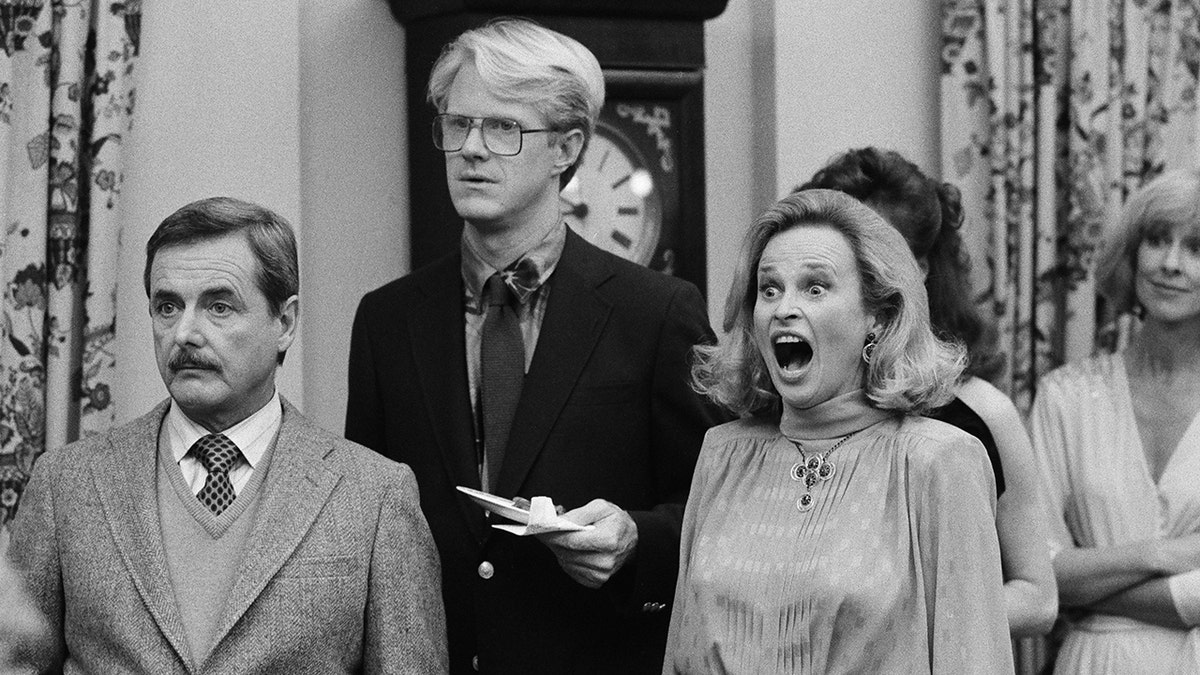
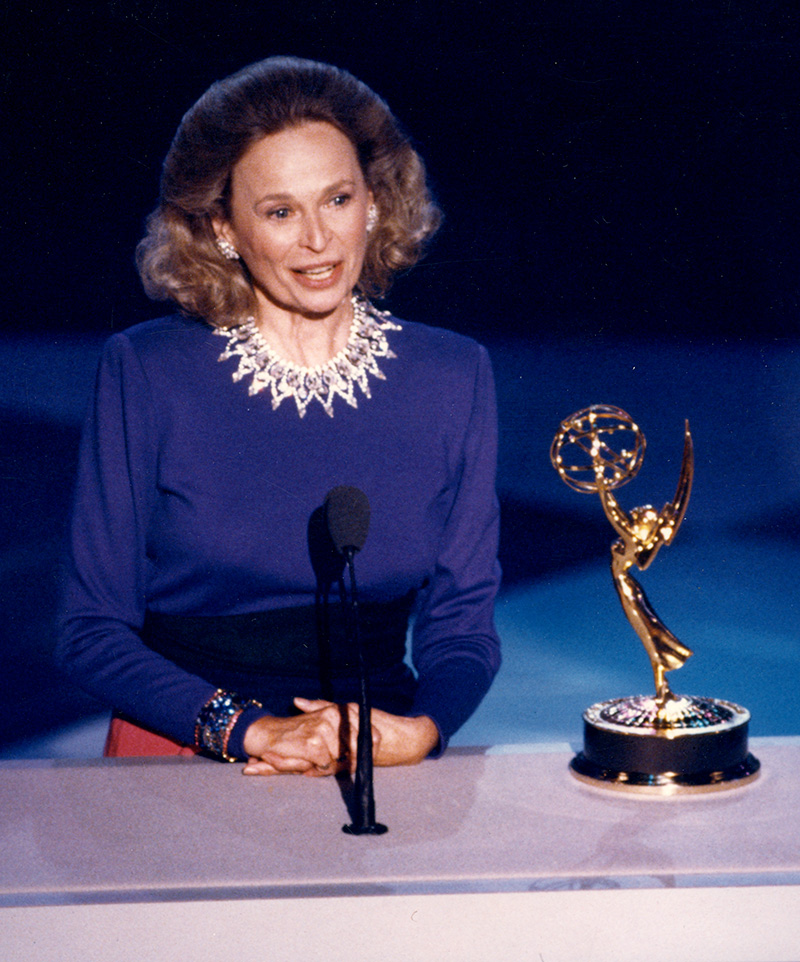
How do you remember that glorious night in 1986 when you both made history by winning Emmy Awards simultaneously?
It was very exciting for me. Bill didn't care. But when I say he didn't care, I mean he's all business, and he believes that awards are only there to promote business and that they aren't really accurate. He said, "There's no such thing as being the best. There's good work, but there's no best." So he's different. But for me, of course, it was very exciting because I hadn't had that kind of applause before. Well, I had it when I was a kid and when I was at Northwestern University, but I hadn't had it in the business. You know, soap opera is not considered top.
Just a year after you began acting in St. Elsewhere, the hit miniseries V premiered. How did the role of Lynn Bernstein come your way?
I was just cast. I mean, I didn't have to read or anything. It was a wonderful show. It had some problems—Dominique Dunne, a very young girl who was one of the lead girls, was killed the first week we started, and oh, that was horrible. But my role was just a very good acting role, it didn't have much to do with science fiction. You know, a Jewish mother who's betrayed by her son. And the subject matter is so harsh, so cruel, that it plays itself.
You had a memorable guest role as Barbara Thorndyke on The Golden Girls in 1988. What was it like working alongside such strong female leads?
Well, I knew Bea Arthur and Rue McClanahan from New York. I didn't know Betty White. Bea I knew very well, so she was very helpful on the set. I was nervous because they're all so good and so funny, and I didn't think of myself as very funny. Anyway, it worked, and I was shocked that it became such a big favorite, because Barbara Thorndyke became the woman you love to hate, you know. I got a lot of flack about that. And as my husband says, "You don't want to play an anti-Semite. You don't want to do that." The audience booed me, and that's the only time I ever got booed. I don't know—I didn't feel at all that I was that evil. But, boy, they picked up on it. And I was mean to those girls—always with a smile, but very mean. And the audience didn't like that at all.

That same year, you played a leading role in the film Twins with Arnold Schwarzenegger and Danny DeVito. Did you ever imagine it would become such a box office hit and a classic of its time?
I had no idea. No idea. I didn't think it was that good a script. I enjoyed doing it, and I very much enjoyed working with the director, Ivan Reitman, because he was terrific to me. But I didn't think it was that special, no. And I didn't even know who Arnold Schwarzenegger was. But he's a very good guy. He's a bright man—super bright—and I respect him quite a bit. Not as an actor, but as a human being (laughs). And Danny, well, he's Danny, what can I say. He's wonderful, and you just play with him. That's all; it's all like a game.
Coming from a strong dramatic background, what was it like for you to film a sitcom like Home Improvement in the 1990s, playing Tim Allen's character's mother?
Well, when I have to do a comedy, I am nervous because the producers want those laughs. But Tim Allen was wonderful with me, and he would say, "Just do it" during the filming. And I'd say, "I can't do that." But then I would just do it, and we'd get big laughs, and he'd say, "Now, wasn't that fun? Didn't that feel good?" And I learned to relax a little bit and work with them. Patricia Richardson, who played his wife, was wonderful to me as well. So doing a sitcom was like a learning experience for me, and I learned to get on the right level. You know, it's not that you do anything differently, but you go on a different level. It's not that serious; it's just not that serious.
Can you share what it has been like for you and your husband to balance your marriage while building acting careers side by side in the same industry?
It just happened. We just managed to do it. I mean, we're just meant for each other. We could forgive each other if we went astray, or if we were angry or something, you know. Once we got out to California, the marriage was much easier. We had two boys, and Bill could be with them instead of at the theater all the time. You know, he could take them to school. He could barbecue—he became a wonderful cook. And we were together all the time. And that's what does it: you've got to be together.
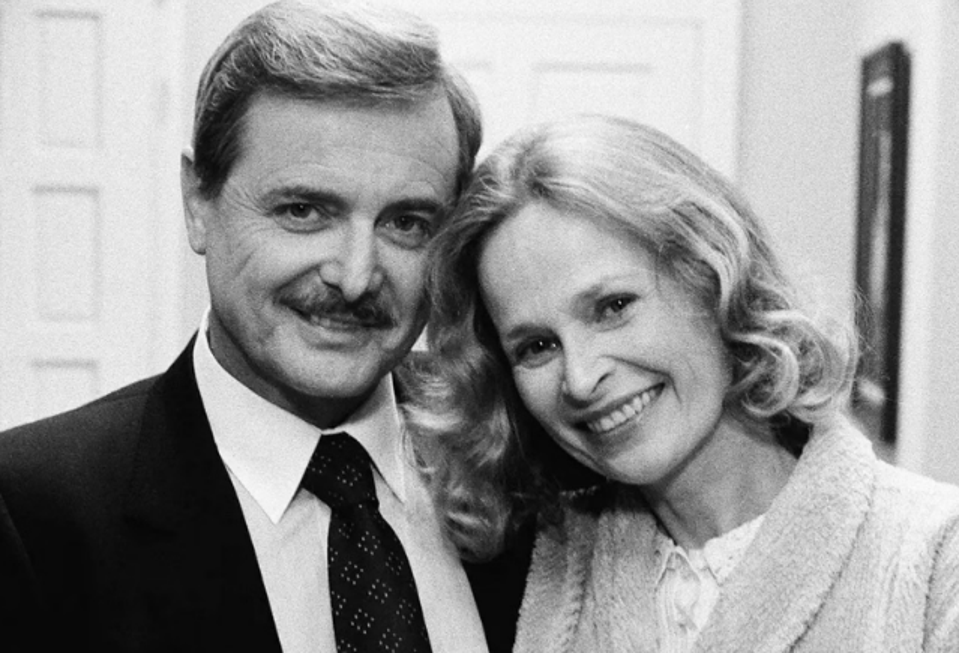
Given that the two of you have been together for 74 years, one could imagine there were ups and downs. As a matter of fact, your memoir reflects on how early in the relationship you had an open marriage, which ended up being very painful for both of you. What led you to make that decision at the time?
We never made a decision. We just lived. We got married because, at the time, you had to get married to live together. So, you know, it was all about sex, right? And we loved being together. We loved helping each other. But, I mean, we never had boundaries. We never talked about it, never discussed it—nothing. And everything just evolved. Everything just managed to move along. And yes, of course, you're deeply hurt—deeply hurt by anything that seems serious. There were times when it was very tricky. But coming out to California really solved the whole problem because we were together. We're fine when we're together. We had to come here because we just couldn't live like that.
Could you elaborate on that?
I had two kids, and I didn't want that anymore. I call that growing up. But, you know—no decisions, no plans. We never had plans of any kind. We never said, "This is going to be like this." We didn't really have any control over what happened. But we've been lucky to have made it together because we like each other, we like to be with each other—that's all it is, you know: living with somebody that you like to live with every day.
Is that how you would describe this stage of your relationship nowadays?
We're 96 and 99. It's very different when you're that old. We are very definitely dependent on each other—very dependent. You know, by that time, you need each other. Absolutely, totally. As a matter of fact, it's hard to find time to do something you want to do by yourself because you have to be there with him all the time, making sure he's okay. Not having the time to do my own things is a problem. It always has been.
:max_bytes(150000):strip_icc():focal(999x0:1001x2)/william-daniels-bonnie-bartlett-1-73dc9034d63c4cdd81560b3d174ba2c2.jpg)
What is one way you are different from each other?
We are bad travelers together. I travel very well with other people—you know, other women or somebody. He's the worst traveler with me. He'd say things like, "Why aren't they speaking English?" I'd say, "Billy, we're in France." He would reply, "Well, they should speak my language" (laughs). I mean, this was a long time ago. But, you know, he was like the typical American man who would go to a foreign country and expect to have everything he had at home. He is one of those funny guys. I'm much more open to new things.
After experiencing the loss of a child, you chose to adopt your two sons, Michael and Robert. Looking back, what would you say was the most valuable thing motherhood taught you?
Love. I mean, there's nothing like it. For me, having lost a baby, that really made me want to nurture. And I said, "I gotta have a baby to nurture. I have to do that." So I got two. I had a wonderful doctor who found them for me, and they're two absolutely marvelous sons.
How is your relationship with them today?
Michael lives close to us, and he does so much for us—we couldn't manage as well as we do in our own home if it weren't for Michael being able to help us. Rob is far away, but they're good friends. We all kind of work together. We have an online store, billandbonniedaniels.com, and one of my sons, Rob, sells everything: pictures, books, and other stuff. Because we have so many fans out there and they all want things from us, this is a wonderful way to get it to them. We also occasionally do conventions, and we go out and meet all the people, which I love. And it's great because it keeps you going, it keeps you alive, it keeps you active—you have something to get up for. They want us, and we want to give them what they want. That's kind of the way I look at it.

What inspired you to write your memoir, Middle of the Rainbow, and share your personal stories?
I think I'd always wanted to—my whole life. But I waited. First of all, Bill wrote a book, and I was happy that he did that. A couple of years later, I had a very good friend who encouraged me and helped me to write. He said, "Just write everything, and then we'll edit it." And so that's what I did. He said, "Put it all down. It's important." I had many, many years of therapy, and I would say that's guided my life. So I wanted to write about that. By that time, everybody I could hurt was dead—you know, parents, brothers. All the things I might have said that weren't nice about them didn't matter because they were gone.
Your most recent television credit was two episodes of the acclaimed series Better Call Saul. What was your experience like working on that show?
Well, that whole group—the director and Bob Odenkirk—had their own way of working. And it was different from anybody else's, you know. They really wanted you to get into the experience, I think. And that's why they did it that way. In other words, if it were, say, the leading lady, and she had a scene where you might expect her to act in a certain way in another show, they didn't want her to do any of that. They just wanted her to live through the scene naturally. That was really interesting. Bob had been a stand-up, but he didn't want you to laugh at him. He made sure that he didn't do anything that made you laugh. But he was very good.
Do you consider yourself a working actress active in the business?
No, I'm not retired, but I'm also not really working. They don't want to hire anybody my age. But I'm open to work if somebody calls me, of course—only if I can do it. There was one thing that I was not offered, but they considered me for it. She had to run upstairs and make a lot of noise, and I said, "I really can't do that." At that time, I couldn't. Now I can, because I've got my legs strong. But if I can't do it physically, I can't accept something and let them down.
Aside from professional projects, what are you looking forward to?
I want to live long enough to get this goddamn man out of our White House. I am absolutely appalled by the cruelty and the lack of empathy for people. I knew him in New York a long time ago. He was always a fool as a young man, and we laughed at him. And, yeah—who's laughing now? Who would ever have imagined that this country could have elected this man? And then he puts in all these assholes. I can't not speak about it because it's so ugly. It's so painful. Why not a little kindness here? I don't believe in killing people. I don't believe in wiping out a whole bunch of people. I just don't believe in that. And I think that the people who are in charge—Netanyahu, Trump, and all of them—I think they are evil, and they're born evil. They are sadistic men. It's not only sad, but it's dangerous.
Is there a final message you want to give to my readers?
Be aware of what's going on, and be a good citizen. Know what you're doing, and don't follow the leader, you know. Keep thinking. Keep observing. Keep watching. Keep learning. And maybe all the protests that we're doing in this country will serve a purpose. I know they've been wonderful in other countries as well. Keep educating yourself. The young women that I see and talk to—they're so much more advanced than I am—and I hope that continues.