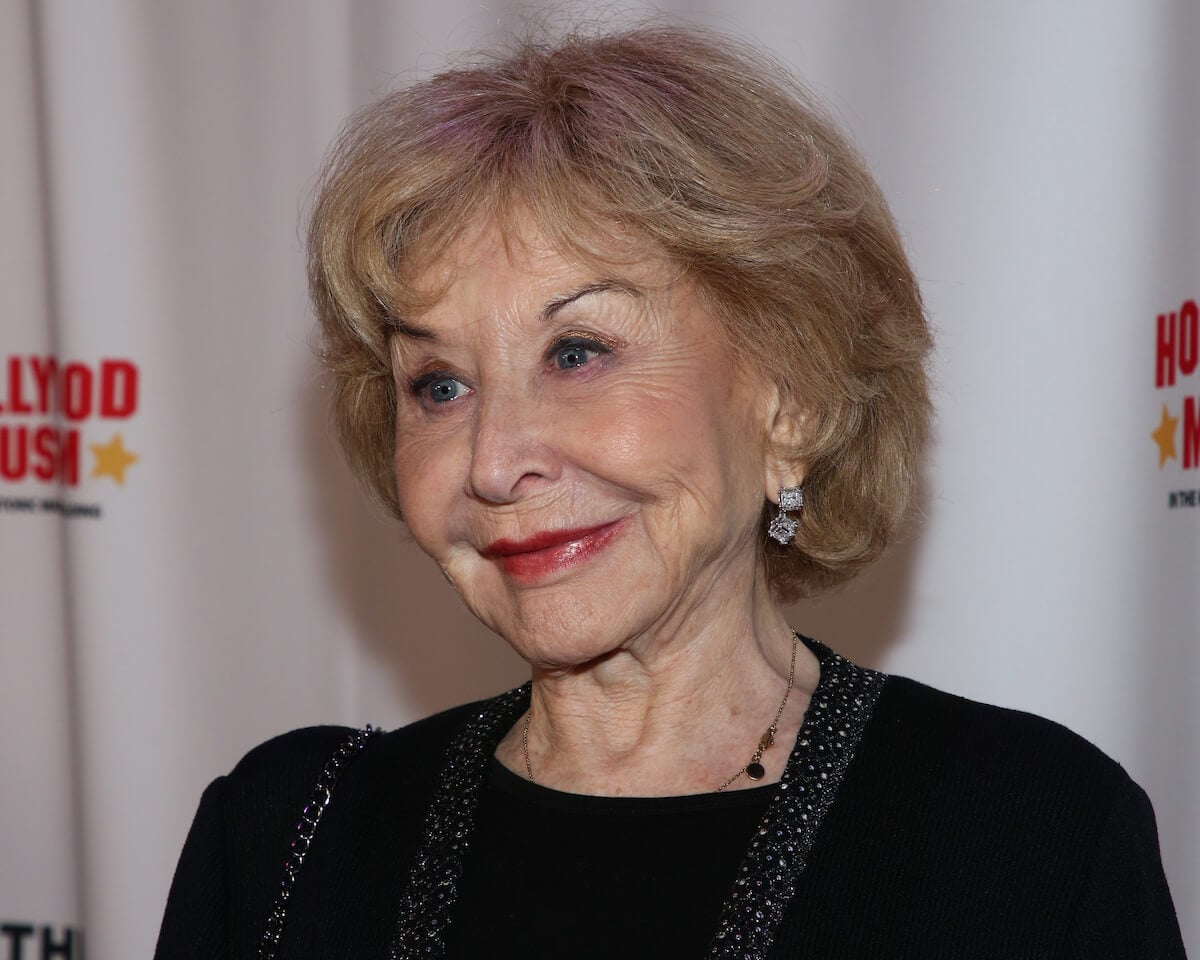
When you were 11, your dream was to become a prima ballerina. At what point did you decide to abandon that dream and pursue acting instead?
I was at an English boarding school that focused on ballet and dance —modern, tap, all kinds of dance— but primarily ballet. One day, a teacher came up to me and said, "You know, you're not a very good dancer, so you might consider becoming an actress instead." I said, "Okay." I was tall, overweight, and had flat feet, so I was happy to join the special drama group.
But had you considered acting as a career beforehand?
No, no. I won the school competition —it was the Drama Cup, which was to everybody's surprise, including mine. That's when the teacher came up to me and said, "Maybe you should think about acting instead." So that's basically how it happened. This school was a dance school, but it also had a special drama group that was more interested in dramatics than dancing. We had one drama class a day and one dance class a day, so it was wonderful training.
Your parents decided to name you Michael, which is typically a male name. Have you ever asked them why they made that decision?
I did ask my father, "Why did you name me Michael?" And he said, "Well, if you had been a boy, we were going to name you Caleb. But since you were a girl, we decided to name you Michael." That's why I'm a little crazy.
Has your first name ever led to misunderstandings or confusion about your gender?
Yes, mostly when I was little. Someone would say, "What is your name, little girl?" And I'd say, "My name is Michael." They didn't believe me. They would ask, "What's your real name? Are you sure your name isn't Michelle or Mickey?" You know, I got a lot of that, but mostly from the grown-ups, not from the other students.
During the early seasons of The Waltons, the famous show you starred in during the 70s, the word ‘Miss' was placed in front of your name in the credits. Was it confusing for the audience too?
Yes, because I had done mostly theater. I lived in Canada, in Toronto, where my youngest son was born, so I raised my kids mostly there. They knew me pretty well in Canada, but they didn't know me in the USA at all. They thought that if they showed a picture of a woman with a little girl, and then the name was Michael Learned, people would be confused. So they asked, "Is it okay with you if we put a ‘Miss' in front of your name?" I said, "Sure."

The first season of The Waltons was commissioned following the success of the TV movie The Homecoming: A Christmas Story, in which the role of Olivia Walton was played by Patricia Neal. Why were you chosen to replace her in the series?
It breaks my heart because they told me Patricia Neal didn't want to do a series. That's why they wanted me to test, and I tested. I was in a restaurant in New York when she came up to me and said, "Hello, I'm Patricia Neal, and blah, blah, blah." I was so flattered because, to me, she was a film star and I was just TV. But we became very good friends, and years later, I said, "Why did you turn the role down?" She replied, "Oh, but my dear, I didn't. They didn't want me." I think it was because she had had a stroke and perhaps they couldn't insure her or something. But I felt terrible for her. She did want to do it.
Was there any animosity between you and Ms. Neal regarding the recasting of the role?
Not at all. She was the most gracious, loving person. We became very close after it all, and I couldn't have asked for a better friend. I never saw a minute of jealousy or anything. If she did feel any, she never showed it to me. She's the one who came up to me when I was in the restaurant to congratulate me.
Why do you think the producers chose you in particular?
I think I got lucky. I had a woman who used to come to the theater. Her name was Ethel Winant, and she was the head of casting for CBS at that time. She had seen my work doing classics and stage work mostly. Years later, another director friend who knew us both said, "She wrestled Fred Silverman to the ground over you." Apparently, he didn't want me; he didn't think I was right for the role. And she kept saying, "You've got to take this person. She's right for it. She'll be perfect." God bless her because it turned my life around.
How was your life back then?
Pretty crazy. I was drinking too much. I was going through a divorce. I was, you know, becoming basically a single mother with three sons. My oldest was 15 and my youngest was nine, I think. We had just moved; it was a really tough time. I drove down in a little VW Bug, stayed at a very cheap motel, auditioned for the role, and got the part. It was like God's hand was on my shoulder.
Can you describe your experience playing Olivia Walton and how you perceived her character's development throughout the TV program?
I got into trouble with the writers sometimes because Earl Hamner, who is the creator and the real John-Boy, wanted Olivia to be perfect. And I said, "They're going to hate Olivia if you make her so perfect. You have to show that at least she scolds the wrong child. Every mother makes mistakes sometimes." I then added, "It doesn't have to be serious. She doesn't have to run over the cat with a car or anything, but she's got to be a little more human." And so they did. Not a lot, but they did give me a kind of sternness, which I liked. She was a little bit judgmental. She wasn't perfect, but she loved her kids. That's easy because I loved mine too. And they're lovable kids, the Waltons. They're now middle-aged, but when they were little, they were just adorable.

How was your relationship with your co-stars?
Ralph Waite and I loved each other. We were never lovers, but we were very close. We were smart, though. We said, "If we take this any further, it could be trouble." So we never did. We were just loving friends. And the kids are still my kids today. They're my second family; I think of them as my own. We love getting together. And Eric Scott, who played Ben, is terrible. He tells the worst jokes, and he cracks us up so much. David Harper, Mary McDonough, Judy Norton —all of us— are close. They're all grown up and have their own kids now, so we don't see each other as much as I would like. But whenever there's a reunion, we all show up.
What were the reasons for your departure from the show after season seven?
You want an honest answer? I was just bored. I talked to Earl about it. I said, "You know, it's so hard to play this perfect person. There's no drama. There's nothing for me to act." And he said, "Well, we just need to have the mom in the scene. She has to be there." Sometimes I'd put in a 15-hour day and just say, "More coffee, John?" You know, that kind of thing. Richard Thomas left the show after five years, so my contract had to be renewed. I did renew it, but finally, I said, "I can't do this anymore. Would you please release me?" And they did. So I didn't offend anybody, thank God.
Didn't you appear as a guest star in the eighth season?
Yes, I did come back. In fact, they shot my scenes in New York because I was living there. I was shooting a series called Nurse. So, at lunchtime, I went from Nurse Mary Benjamin to Olivia and back to Nurse Mary in one day. It was fun.
Have you ever seen the conference where President George H. W. Bush said, "We need to make American families a lot more like the Waltons and a lot less like the Simpsons"?
I don't remember hearing that, but he's right. Well, The Simpsons are fun too, though. That's wonderful. How would I know he even knew who I was? That's really flattering.
After becoming one of the most admired moms on the American small screen, did you find it easy or challenging to secure other meaningful roles?
Well, a little bit. I played a nun in St. Elsewhere, and I played a nurse in the series of the same name. So, obviously, they saw me as a nurturing person, and it took a little while to let that go and just be an actress. But now I think I get chosen for various, more interesting characters. It's hard to play a good person. Good people don't do anything; they're just good.

How do you make those characters interesting?
Soulful looks, I guess. It's all in the eyes, especially on television. But at the end of the day, it's not that interesting, no matter what you do. You've got to find something that makes a good person human.
You starred in Nurse, a TV movie from 1980 that later evolved into a highly successful program. What led to you receiving the offer for the show?
Robert Halmi was the producer. And interestingly enough, he knew my father because they both were working for the Secret Service just after the war in 1950. Halmi was working for the Hungarian Resistance, and my father was working for the OSS at that time, which became the CIA. And all secret, I didn't know any of this. I was just 11 years old. But anyway, he knew my father, and he obviously knew of my work. And also at that time, I was popular with CBS, the network. So he came to me with this book, Nurse. It was an interesting book. And I said: "I'd love to do it."
Can you describe your experience on set?
It was hard. We were shooting in a hospital. When you're shooting in a studio, they can remove a wall and change things around in just a little bit of time. But when you're shooting in a real place, nothing moves. So it took hours sometimes for them to light it and get everything the way they wanted it. Robert Reed kept very much to himself. He was a very, very genteel, very nice man. But we weren't as friendly as Ralph and I were in The Waltons. So it was just a tough shoot. I was very, very tired, and I was relieved when it got canceled. I was partly at fault there.
Why?
I said, "I just can't do this anymore." I can't work 15-hour days because you get so tired you can't rest. It's like when you're working so hard that, when it stops, you're still wired. I just thought I was going to go under. And they canceled the show. I didn't want them to cancel it, but they did.
When they adapted the TV movie into a series, did that impact your approach to the leading role?
Yes, because, again, I had to fight. She's a good woman, but she's got to have some little kink or fault. So I used to tell them, "Make her make a mistake." Not as a nurse, because you don't want anybody to die, but, you know, in her personal life. And they did; they tried very hard to make me happy and to make the series better.

You won 4 Emmys —a record in the Outstanding Lead Actress in a Drama Series category, which you share with Tyne Daly. How do you feel knowing that your work was so highly awarded and has left a lasting impact?
It doesn't mean a thing. It's nice when it happens, especially the first one, because I had no idea. Hollywood was new; I wasn't used to all the limos and all the things that come with going to a big gala like that. So I didn't expect it. I was with my son Chris —he was my date— and the two of us were just having fun. Then, suddenly, they called my name, and I was terrified because I had to get up there and say something. I don't even remember what I said, but apparently, I didn't screw up too badly. The first thing I did was call my other kids, who were at home, and they were running around and jumping up and down.
Did you get accustomed to it at any point, given that you won several times?
No. Each time, it just became more nerve-wracking because I knew there was a possibility, maybe. The one for Nurse, I didn't expect. I had just flown in from New York in my dress, and my hair was in pin curls, so I was combing my hair in the limo and was stressed. The limo arrived at the red carpet, and my ex-husband wouldn't come in with me because he found a spot on his shirt. So I'm thinking, "I have to walk the red carpet all by myself." We called a mutual friend, and he showed up on the spot, in his dinner jacket. He escorted me, and he was just a sweetheart.
In the late 1980s, you played the owner of a modeling agency in Living Dolls, where a young Halle Berry made her debut. What was your impression of her during that early stage of her career?
Halle Berry is one of the sweetest, nicest, most considerate people I know in my life. We were very close while we were shooting the series, and then we were close for a while later on, but you kind of drift apart. She sent me an invitation to her wedding. I remember that about two years afterwards, we were at a mutual gala, and she was all dressed up. She looked gorgeous, and when she saw me, she just came running half a block down to give me a big hug.
What about Leah Remini?
Leah, the same thing, but Leah's a different kind. Leah's more like she presents as an actress. She talks a little tougher. She's not tough; she has a good heart, but she's just a different personality. She's more New York.
Is it true that, towards the end of that sitcom, you were going to be replaced by Marion Ross?
I think I was replaced. I'm not sure, though, but I think I was. You know, I wiped the bad things out of my mind. I was not happy during that show, but I can't remember why.

How does it feel being replaced?
I don't remember actually feeling bad. I think maybe I was just glad I wasn't putting in the hours. I was replaced in The Waltons by Peggy Rea, who played an aunt who came in. She wasn't Olivia, but she was kind of the mother figure. I was very happy for her. She was a nice woman. And Marion Ross, I like her. We were not best friends or close friends, but we were friends. You know, in this business, you can be competitive, but I've never been competitive like wishing someone else badly. I try to be supportive and loving. Sometimes you get disappointed when there's something you want to do, but you don't want to resent the person who got the part. Life's too short.
Do you have any memories of other shows you did in the past century?
I did one that I loved; it was produced by Jay Presson Allen. It was called Hothouse, and it took place inside a psychiatric clinic where the doctors actually lived. I was having an affair with Art Malik, the wonderful Pakistani actor who happens to be as nice a person as he is gorgeous. We had lots of scenes in bed, and the only thing I can remember is that I was too embarrassed to be naked, so I always had a towel wrapped around me or something. Jay Presson Allen would get so mad; she'd say, "I can see the towel in the close-up." I would reply: "I'm sorry, I just can't. I have three sons. They don't want to see Mama's titties on the screen." So I somehow got away with it.
From the mid-2000s to the early 2010s, you appeared in several soap operas, such as One Life to Live, General Hospital, and The Young and the Restless. How did working in this genre contribute to your career as an actress?
Well, I played a judge in one of them, and I think it was General Hospital where I played a woman who was dying of cancer. She was a wonderful character. Jane Elliot, who stars in that show, put in a good word for me, so I got that lovely part. But those people really work hard. When I played the judge, I had to have the lines next to me because she had a lot to say, and I didn't have much time to prepare. It was a good experience for me. I don't know how those actors do it every day. They go home at night and learn pages of dialogue for the next day. I'm impressed. And they're all good at what they do, mostly.
More recently, in 2022, you participated in the series Dahmer - Monster: The Jeffrey Dahmer Story, where you played Catherine, the grandmother of the infamous serial killer. What are your memories of filming a project like that, which deals with such sensitive topics?
Luckily, I didn't have any scenes where anybody was being killed. My scenes with him, with Evan Peters, were just scenes of grandma loving her grandson. At that time, my grandson was living with us. I remember coming home from shooting and thinking, "What would I do if I discovered that this lovely young grandson of mine was a serial killer?" I would still love him. But can you imagine the shock that must have been to Dahmer's family? Evan Peters played him brilliantly. He's very generous, kind, and sweet. But for him to carry that role, to go home at night after frying somebody's liver for dinner, must have been a burden, but he never showed it.
How was your experience working with Richard Jenkins?
Great. Richard was just a really endearing presence on the set, he's just a lovely guy. He was always cracking jokes while they were lighting, or we'd get into long conversations. So, that whole shoot for me was fun, even though it was about a terrible person. The hardest part for me was when I was trying to do research to find out about her. There was very little about Catherine, just some home movies where she's holding her cat. But a lot about him.

What was your impression of Jeffrey Dahmer while doing research about the case?
Hearing him talk about these murders in such a rational voice —like he was talking about a shopping list, as if it were no big deal— was the hardest part. "Oh, yeah, and then, well, I don't know why I killed him. There must be something wrong with my brain." I'm thinking, "You think there's something wrong with your brain? There's definitely something wrong with your brain." But he was a very handsome, very personable young man. I could see how his victims could be fooled by him. He was a terrible monster.
Do you recall the real-life Catherine from the early 90s, when the crimes came to light?
No, I have no memories of her. But she was very loyal, apparently. She was at all the courtroom hearings and loved her grandson. My youngest son, once, when he was nine years old, said, "Mom, if you found out I was a serial killer, would you turn me in?" It's one of those questions where you go, "God, give me the right answer, because I don't know what to say to that." And I said, "Yes, I would have to turn you in. I couldn't allow you to be a serial killer. But I would visit you every day in prison. Every day I'd be there." That was a good answer. That was not me. That was coming from up above.
Do you personally identify with your character in terms of religious beliefs?
I believe in God; I believe in a higher power, but I'm not religious. I went to catechism when I was a kid. I lived on a farm, and we were right next to a seminary. On Sunday mornings, we'd climb over the fence to go there because we were interested —we wanted to learn about the Bible. I've always been interested, but I don't have any one religion. When I'm in nature, I'm with God; it's like a church. I have a house in Wisconsin that's on a lake. It's a quiet lake because it's not big enough for water skis or motorboats. That's where I find my God.
And do you identify with your character's conservative view on homosexuality?
No. I have too many homosexual friends who are just the most remarkable, wonderful, creative people that I know. So, no, absolutely not. I don't identify with that at all.
I read an article in the Daily Word where you discussed overcoming alcoholism through introspection and prayer. What was your journey in fighting addiction like?
It wasn't hard at all. I didn't go through the DTs, nor did I have to go to rehab or anything like that. I wasn't really drinking that much, but it was too much for me. I was going to bed a little tipsy every night. I was going through a divorce, separated from my kids down here while doing the series, and I just sort of would have my bourbon and cry a lot. Suddenly, I realized this wasn't working, and Ralph Waite said, "I'm going to a 12-step program. Would you like to come with me?" I said, "Sure. I'll be your support." Later that day, during the shooting, I said, "Ralph, I'm so tired. I think I'm going to go home instead. I'll come another time." He put his hands on my shoulders, looked deep into my eyes, and said, "I think you should come." I remember thinking, "Me? I'm not an alcoholic." But I went, and I learned an awful lot. I decided to stop drinking too, and I'm really glad I did. I haven't had a drink in 45 years.

This year, you filmed a movie called Our Crossroads alongside the equally legendary Pat Boone. Can you share the premise of the story?
The story is about a woman named Barbara Fraley. I called her and I talked to her on the phone; she was just full of life, energy, and warmth. I loved talking to her. So it's her story; the film mostly focuses on her youth and then on adopting all these children after she already had multiple sclerosis. Pat Boone and I just have one really nice scene at the end of the movie; we're kind of like the frame of the film. Pat's a very sweet man; he was easy to be with. It was just one day of shooting, and I had a blast —I really enjoyed myself. Usually, I complain and moan because of the hours and stuff, but on this day, it was like a golden day. I had a wonderful time.
Do you know when it might be released?
It seems to be the biggest secret in L.A. Since the day I shot it, I haven't heard a word. It's just like it never happened. I suspect it will probably end up on television, maybe on INSP or Hallmark Channel or one of those places. That's just my suspicion; I'm not sure.
How is your life these days?
It's a little boring at times, but I have grandchildren and my husband, who brings me chocolate chip cookies. Valerie comes in once a week and is like my best friend. So I have a very good life. I'm still sober, which is nice. I just came back from Wisconsin. It's so quiet, and it's so green. L.A. is not a very green place. It's basically a desert where people have managed to have yards, ivy and stuff, but it doesn't feel like home to me. But Wisconsin does; I don't know why.
Besides Our Crossroads, do you have any other projects, either personal or work-related, planned for the near future?
I'm supposed to do a film in September with Loretta Swit from M*A*S*H. She's the lead, and I'm playing a supporting role. It's a sweet script; it's about a woman who takes in a little homeless boy and kind of turns him around —that's Loretta's part. My part is just a nice person, so I'm on them, "Give her some juice, make her not like the little boy at first, and she has a turnaround or something, rather than just being nice." I'm so tired of nice. I'm not a nice person. I'm a human person; I make mistakes, and I can be mean as a snake sometimes. My husband says, "You've got a mean streak a mile wide." That's only when we're fighting; otherwise, I'm not that way.
Finally, is there anything you would like to add?
I have to say I went through a tough time when I was younger. I had many good things happening on the outside, but on the inside, I had a lot of sadness and depression; I was in so much emotional pain. And I don't have that anymore. I learned later that a lot of that was just anger. I didn't know that I was an angry person, so I was turning it in on myself. I think you can use anger constructively. I always think of the Jewish people during the war and after; they used their anger to help other people. I've always been impressed with that. My recommendation is to take your anger and put it into your work; use your anger in a creative way.