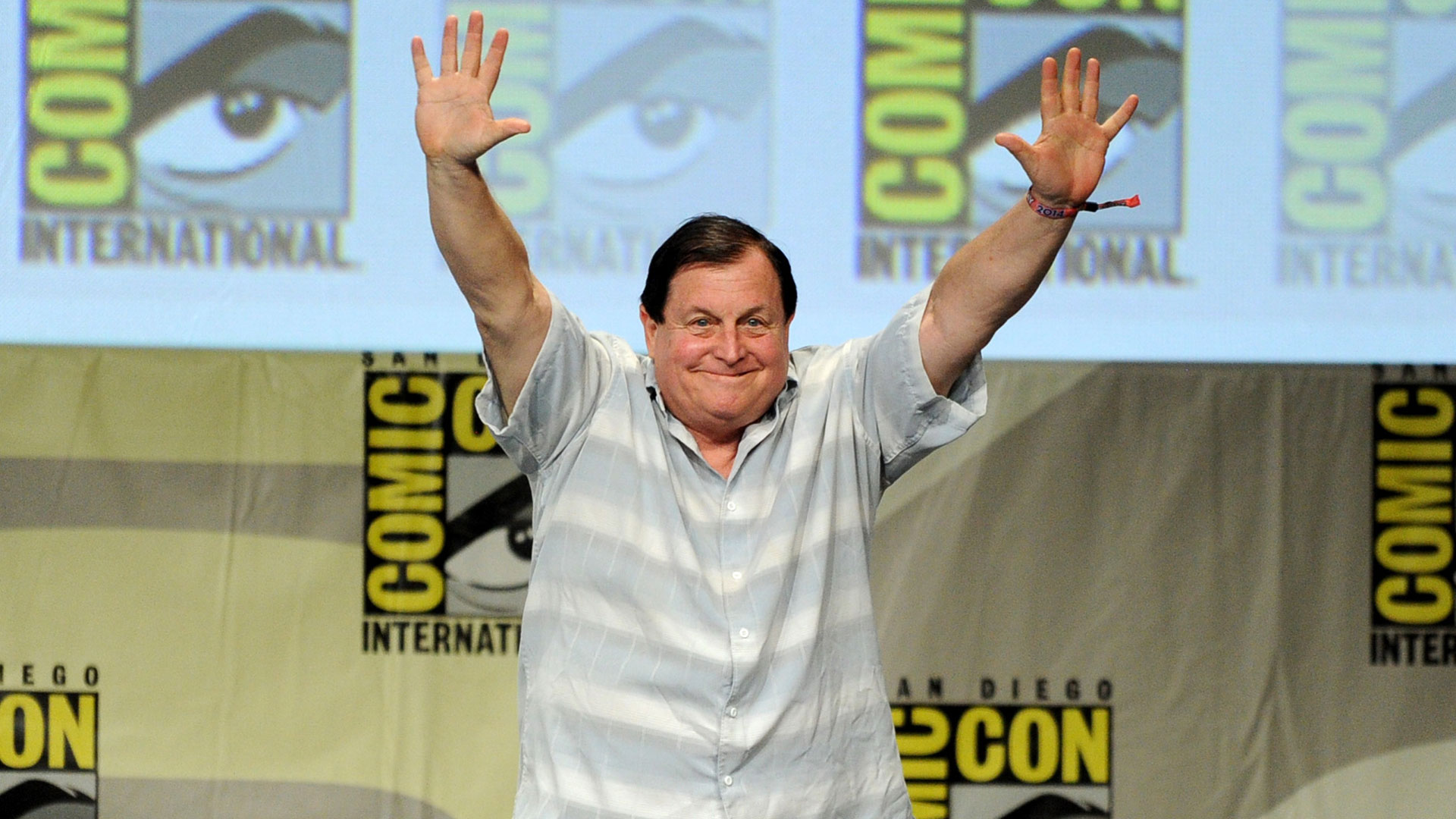
In 1947, at just two years old, you were featured in Strange as It Seems magazine as a professional ice skater for your participation in your father's traveling show. While you may not have personal memories of those early years, what stories did your family share with you about those first steps as a child prodigy?
Well, actually, I do remember a little bit. I remember the bright lights—you see, when you're in an arena and you're on the ice, and the lights are on you, everything is very bright. You can hear people, but you can't see them because they're in the dark. I was introduced, and two of the skaters came out and held each of my hands. We skated around—which was like, okay, you know, a little kid, two years old, he's on the skates, and they're holding his hands so he doesn't fall. But after skating around, they let me go, and then I skated by myself.
What was the public reaction?
People said, "That's impossible. There's no two-year-old in the world who can skate by themselves around this whole arena." The crowd roared—and this happened many times because it was a traveling show. So, I do remember that. I also remember my skates: I think the shoe was about four inches long, and the skate with the blade was about seven inches long—that's how small they were.
During your childhood, aside from ice skating, you were very passionate about sports. Which ones did you practice?
I just love all sports. In school, I played football, baseball, track, and wrestling—that's both in elementary school and high school. I also participated in mental sports; I was the number one chess player on our chess team. Later on, after leaving school, I got involved with martial arts and karate. I enjoyed that as well. So, I've always liked a combination of doing lots of physical action as well as mental action. You know, a lot of people just like to watch sports; I like to participate in sports.

Talking about mental action, you were also an exceptional student, earning top marks in math and science exams, and even becoming the world's fastest reader according to the American Medical Society. Can you tell us more about how you achieved these remarkable feats?
Well, when I was in school, I read like the average reader. The average person reads about 240 words per minute with about 40% comprehension. I started studying it, and I became fascinated by it. I had a teacher at our high school who was considered one of the top experts in the country, so I had the benefit of that. I studied and studied, even into college, and at my highest point, I was tested at 30,000 words per minute with 90% comprehension. To give you an idea, that is the speed of reading the entire play of Shakespeare's Macbeth in one minute. I read a big book called War and Peace, which is 1,440 pages, in 45 minutes. And I got an A essay final at UCLA — University of California, Los Angeles.
After being represented by a Hollywood agent, your first interview led to your most iconic role as Robin in the hit 1960s TV series Batman. Why do you think you were chosen for such a prominent role?
Well, I found out that 1,100 young actors were interviewed for that role. That is very, very unusual — that's got to be a record. After I got the role, I spoke to the producers, and they asked me, "Would you like to know why we picked you?" I said, "Sure." They said, "We picked you to play Robin because, in our minds — forgetting television for a minute — if there really was a Robin, we believe that you personally would be it. So all we want you to do is two things: we want you to be enthusiastic, and we want you to be yourself." Well, anybody can be themselves, right? And that's what I did. In three years and 120 30-minute episodes, no director ever told me how to say my lines; those were my own emotions, my own thoughts.
I understand you became a black belt in karate, and that Bruce Lee filmed his first fight scene facing off against you in an episode of the show. Is that true?
Oh, yes. His first filmed fight scene of his career was fighting me on Batman. His character was called Kato, and the TV show was The Green Hornet. It was the same producer who did both shows. The Green Hornet was coming on in the fall. We'd already been out for about six months, and he introduced his new show by having the actors come on Batman. We were number one and number two in the whole world at the time. That was the best way to launch a new series — to have the actors from a new show come on a show that was already a big hit. It was really cool.

Did you become friends in real life?
Yes, indeed. We found out that we lived in the same condominium complex of buildings, and we used to spar together—not pulling punches, but still pretty rough. We also would go to dinner: he and his wife, Linda, and, at that time, his son Brandon, who became quite an actor, was only six months old. We would go down in Los Angeles to Chinatown, where they're very famous. Bruce would order everything that wasn't even on the menu because he lived in Hong Kong for 10 years. He was a happy-go-lucky, funny guy. He had a really sharp personality and used to say to me, "As fast as I am and all the martial arts I do, it's still most important to use your brain." He trained eight hours a day, every day. It could be Christmas Day, and he would train. A great martial artist.
Did you get along with Adam West, the actor who played Batman, right away — or did it take time?
Adam and I met at our screen test, before either of us ever got the job. The director said, "Would you like to meet the actor who's going to play the other part? You might want to sit down next to each other and go over the lines." And I said, "Okay." I sat down next to him, and he and I started to talk. Within five minutes, the two of us were laughing so much. We never stopped laughing for 50 years. We were like instant friends. And he was a very funny man. Guido, he was the kind of man where everything he said made you think, "Is he putting me on? Is he kidding with me?" He could say things that made your eyes open—oh my gosh, embarrassing! But he was just the nicest man. And oh, what a great actor.
How did you both develop the chemistry needed for that inseparable dynamic duo?
We played opposite types of characters. He was big and tall and very suave, and I was small and fast. He spoke very slowly, and I spoke very quickly. The greatest comedy duos here in America have always been a great contrast—they are very different from each other. Like Laurel and Hardy: one was kind of big and fat, and one was skinny. When that happens, it's just a perfect match. We just got along incredibly well.

Why did you do your own stunts on the show, considering it led to you being hospitalized on more than one occasion?
It actually wasn't my choice. I had to. I'll give you a quick story. On Batman, on the first day of filming, my first shot: we were up in Bronson Canyon, and they said, "You go inside the cave, get in the Batmobile, and you're going to drive out to the camera. Then you're going to make a sharp turn and head off towards Gotham City. That's what the shot is." So I got into this dark cavern—you can't see very well. But I finally found the Batmobile and got in. I looked over and thought it was Adam West, but it wasn't. I said, "Oh, who are you?" He replied, "My name is Hubie." I said, "Oh, well, why are you dressed as Batman?" He responded, "I'm a stuntman, and this is a very dangerous stunt. They don't want to take a chance of Adam West getting hurt, so they hired me."
Where was your stuntman then?
I asked him that. He told me, "Oh, yeah, you have a stuntman." I said, "Well, that's good. But where is he?" He replied, "Oh, he's having coffee with Adam West." And I hear them say, "Okay, roll it up, roll it up." I said, "Whoa, whoa, wait a minute. There's a terrible mistake." And they come, "Burt, what's the mistake?" I replied, "Well, this man is telling me this is very dangerous, and he says I have a stuntman too. Why isn't he here instead of me?" They said, "Oh, we can't use him because he doesn't look like you." I go, "Why would you hire him if he doesn't look like me?" They said, "We couldn't find anybody else. So you gotta do it."
I imagine you had no other choice than to do it...
So, there I was, but there was no seatbelt, no handle on the door, no dashboard. There was only a window made of flexible plastic. So, I'm holding on to that, and it comes out at 55 miles an hour, goes straight at the camera, he turns the car, spins around, and unexpectedly my door flew open. It was not supposed to fly open. We knocked over the big camera and some huge hot lights fell down. It didn't hit anybody, but it would have killed you if it landed on you. And when this happened, I was thrown towards the door, but my little finger wrapped around the gear shift knob. I accidentally caught it, and it kept me from going out of the car, but it pulled my finger out of joint. Incredibly painful.

Were you rushed to the hospital?
They came running up to me, saying, "Burt, are you okay?" I said, "I'm okay, but my hand is killing me." And through my glove, my finger had swollen twice as big. They said, "We've got to get you to the hospital right away." I asked, "Okay, but where's the car?" They said, "Oh, we can't go now. We still have to get the shot. We have 30 people here — it's costing ten thousand dollars every 10 minutes. We can't leave." It was 7:30 in the morning. I left for the hospital at noon. It was five, six hours with my finger like that, and I had to do the shot three more times. Then, the next day, there was an explosion, and a two-by-four hit me on the nose, breaking it. Four days in a row at the emergency hospital — same doctor.
He must have thought you were crazy for exposing yourself to such harm...
The doctor said, "You know, maybe you should be doing a different kind of business. This is a little dangerous." I said, "Yeah, but I want to be an actor. I didn't know I was going to come to the hospital every day." I was in pain — second-degree burns, broken noses, and gas inhalation. Oh my gosh, it was dangerous. And throughout the whole series, whenever the guys came with the explosions, I was always like, "Oh, I want to stay away from that."
The memorable role of Catwoman was portrayed by three different actresses in both the TV series and the 1966 movie: Julie Newmar, Lee Meriwether, and Eartha Kitt. Which one did you prefer working with, or which one did you connect with the most?
Every single one of them was an excellent actress, and each had their own portrayal — their version — of Catwoman. I thought all three were great, and they were all so nice to work with. I worked with all the actors who came on Batman that played the villains. These were some of the biggest Hollywood stars, and they were professional and nice, and for me, I was like a kid in a candy store — everything was sweet and wonderful. I had a really good time.

What's your favorite episode looking back?
120. You know, to me, each one was a favorite episode when I came out of it without having to go to the hospital. I consider each one of those the best episodes." (laughs)
And which one was the most difficult to film? Let me guess: the first one...
It was the pilot, definitely. It took three weeks to make it. We were supposed to make two half-hours a week, but it took three weeks on the first one because they spent extra time on all the effects. Everything worked, like giant birthday cakes and trains coming at me. I mean, it was scary, but it was very well done. There were great directors. And when Batman came out, it was number one and number two because we were on twice a week — so, number one and number two in the entire world.
What were the reasons for the cancellation of the series in 1968?
Batman cost so much to make that every week the studio was losing about $300,000. This was in the '60s, so you've got to multiply the money by about 10 times that. That's like losing $3 million a week on a TV show today. There was a person who was an assistant director that got involved. An assistant director is not what a creative director is — an assistant director gets the actors together and gets everybody to come in on time and all that stuff. He went to the producers and said, "I will make sure that you don't lose any more money if you let me direct it." And they said yes to that. He did things that took away the charm, cut corners to save money and save time, and I think that hurt our ratings.

Which of the Batman franchise remakes did you enjoy the most?
You know, I think all of them were pretty good. I think the ones with Christian Bale were among the best. I think what's happened is the studios are getting better and better at it. I mean, they'll make one, they'll put out a lot of money, and they'll learn from it. Then the next one they make, they'll make it even more entertaining. They're all great movies. But in terms of when I think of Batman, I don't think of any of those actors; I think of Adam West. When you met him, the way he talked personally was the same way he talked on camera. He was Batman.
Did you like Chris O'Donnell's portrayal of Robin in the '90s?
I thought he did a good job. He's a very good actor, but I thought they didn't get the character right. The character was kind of rebellious, but not in a nice way. I just didn't think that the characterization was as good as it could have been. And that may be the reason they haven't had Robin in any of the other feature films yet. Someday it will be, definitely. But a lot of people said that my portrayal was so excellent, it would be very hard to duplicate.
What was it like recording songs with Frank Zappa?
It's funny. While I was doing Batman, another studio—their music department—came to me and said, "We want you to make a record." I replied, "I can't sing." They were like, "Oh, don't worry about singing. You can talk in it. We've got a great producer, and we want to put you with this group called The Mothers of Invention." It was Frank Zappa's group. And I was all clean, all American apple pie, you know, kind of look. And all these guys had long beards and shaggy hair, and they would come out and they played, and then they would break their instruments. But they wanted something so opposite. And when I met Frank Zappa, he looked like a hippie — I mean, beard and hair — but a brilliant musician. He just looked like he wasn't, if you know what I'm saying.

Which song did you make with him and his group?
I did this record called Boy Wonder, I Love You. I talked on the record, and it got to be number six in the U.S., but they took it off the air because it was too controversial. They said, "It's from a young girl and she wants you to come over to their house and sleep there for the summer." But it was not about sleeping in her bed or even in her room; it was just a really sweet kind of thing. But, boy, the censors in those days were very strong. They said, "Oh, you can't say this. You can't say that." Now it's just the opposite. There are no censors.
Did you find it difficult to break away from the character that made you famous when it came to landing other roles?
You know, I did 40 other films for television. These are smaller films. And, yes, there was some stereotyping, okay? But, you know, there was always something—either an animated series or an animated movie to do the voice, personal appearances where I would go. I was traveling for 25 years, going all across the United States to all kinds of events. The way I look at it, Guido, is like a glass of water—the glass is full. It could be full of many different projects or maybe one main project and a few smaller ones, but the glass is still full. For me, the glass of success and a happy life has always been full.
You created Gentle Giants Rescue and Adoptions, which is a non-profit organization, with your wife, Tracy Posner, in 1994. You started saving dozens of Great Danes that were going to be euthanized in animal shelters. What led you to make this decision to create this organization and get involved in this cause?
My wife and I were living at the beach, where the property is so valuable—you have little properties but tall buildings. And at three years of age, our daughter was walking out on a third-floor balcony, and we said, "That's not safe. Let's move inland." So we found a city where we live that is animal-friendly, and we said, "Let's get our daughter a big dog." We found a Great Dane that somebody told us, "Well, I can't keep it anymore because I'm traveling. And if you want to take it, take it. Otherwise, I have to take it to the pound—to the shelter." And so I took the Great Dane, and we had heard that other people were wanting to give up their Great Danes—not because they wanted to, but because they had to.

Most people would think that shelters are a safe place for dogs to be in...
Exactly, but about two or three weeks later, we found out that all those dogs we could have taken went to the shelter and were killed. They kill them before you leave the parking lot. The big dogs are gentle around you. People are like, "My gosh, this dog is not running off — he just wants to be here with me." They're very loving. That's why they call them gentle giants. So, in August of 1994, I said to my wife, Tracy, "We've got to do something. How about just for a couple of weeks, until we find somebody else to take these dogs? We can't let them die." By the end of August 1994, in my house, I had one hundred and two Great Danes — adults — and sixty-one puppies under seven weeks of age from six different litters.
How did you manage to take care of all those dogs and puppies?
My wife slept on the kitchen floor for three months because we would bring the mother in, and with a big Great Dane, you have to be careful—because if they step on a puppy, they kill it. You've got to get the mother to lie down, and you've got to connect everybody so that they all nurse. Then, after about 20 minutes, the mother's had enough and she gets up because she's got to go out to go to the bathroom. And you've got to get all the puppies away from the legs, get her outside, get the puppies, put them into a warm place, and bring in the next litter with another mother and their puppies. And by the time we finished with the sixth litter, it was time to start the first one over again.
How big are these gentle giants you have?
We have dogs that are so big, people can't believe it — they're like horses. Most people have seen maybe a 100-pound dog, but very few have seen a 200-pound dog, and almost nobody has seen a 300-pound dog — and not fat, I mean gigantic. We have dogs here who, when they stand up on two legs, are seven and a half feet tall — five inches taller than Shaquille O'Neal. In our kitchen, one of our dogs comes over to drink from the faucet and has to lean way down to reach it. I've had 50 of them in my house over the past 31 years. We have them, we get new ones, we adopt them — they all live in our home together as one big family.

You also created a special food called Gentle Giants Dog and Puppy Food, and Gentle Giants Cat and Kitten Food. Why is pet food without GMOs — genetically modified organisms — a better option than regular food?
Let me give you an example. When a farmer grows food — it could be corn, wheat, soy, or maybe vegetables or fruits — the plant grows, and bugs, mice, and squirrels attack it. They spray a pesticide to kill the bugs, but half the time it kills the plant, and now the farmer can't produce his crop. So, around 1996 in the United States, a big company created a weed killer — but they also changed the DNA of everything we eat, the molecular structure — so that when a farmer grows something and bugs attack it, they can spray a pesticide on it that kills the bugs but doesn't kill the plant. The problem is the plant absorbs the pesticide, and then your dog or your cat eats it, gets cancer, and dies.
What about organic food?
"Organic" means something was grown without any pesticide on it. Now, there's still a problem with that because, with the new DNA changes, the farmer doesn't have to spray a pesticide — the new food, when a bug bites it, the plant itself releases its own pesticide. So, what everybody thought was a safe thing to eat wasn't any better. The only thing safe for humans and animals to eat is non-GMO — not genetically modified. If it's not genetically modified, then it doesn't contain the cancer-causing agents. Twenty years ago in America, a veterinarian would see one dog or one cat a month with cancer. Now, because of the GMOs in 95% of our food supply, they say that every single day, one out of every two patients already has cancer.
Could you explain the process of how you ended up developing this pet food without GMOs?
We're the only ones that I know of who make food with no GMOs in it, and it's very hard to get because only 2% of the food produced in our country is non-GMO. That's all — 2%. Finding that 2% in the whole country took us a year and a half, to find suppliers who could certify it didn't have GMOs. Our animals are living up to 30 years on our food. It's sold in the United States in Petco stores, and you can order it online — but not internationally yet. We are coming to South America and Europe. But it takes time, because there are so many giant companies that use the same bad stuff, and they have all the money to advertise, while we're just a smaller company.

In 1984, going back in time, during the ceremony at Harvard University where you were given the Man of the Year Award, an unusual situation unfolded involving a now-famous TV host. What happened?
I was voted Man of the Year at Harvard University. They voted me above King Juan Carlos of Spain, which, wow, what an honor. They wanted to have a presentation where I spoke to the young artists and actors at the university. So, I had my costume on stage, and it was on a rack. In the middle of my presentation, two students came up, and one of them was named Conan O'Brien. He said, "I'm with security here at Harvard. There's supposedly a report that your costume might be in danger. We're going to protect it." And they took it. That costume was worth $500,000. Mucho dinero, okay? (laughs) I got it back the next day, but oh boy. Then, in 1996, twelve years later, I was on his television show, and we talked about it and both laughed.
You have received countless awards and recognitions over the years, including a star on the Hollywood Walk of Fame and also an award from then President Joe Biden...
Two awards. The first one from the president was the Volunteer Service Award — that was for volunteering and saving all the animals. The second award was the President's Lifetime Achievement Award, and that was for dedicating our lives to helping our precious pets and animals live longer and healthier lives. I also received two other awards — one for my wife and one for me — from the United Nations: their Humanitarian Award.
And what do these awards mean to you, coming from the President or the United Nations?
You can't get any higher awards — I don't think that's possible. Plus, the star on Hollywood Boulevard — not every actor, not every movie star gets to be on the Walk of Fame. You have to be someone who is not just a star, but also someone who does something for humanity. To get that award, it took about three years of various things that I did — events I went to, charitable work, this and that — to earn the opportunity to have it.

What are your projects for the near future?
We're going to be making our own TV shows and our own movies — using the latest in 3D animation technology. In today's world, a lot of people see 3D; sometimes they try to make it look human, but you can tell it's animation, you know what I'm saying? You can tell it wasn't really filmed. However, the newest technology is so amazing that you can create movies with 3D characters that look completely real. You can do things a regular human couldn't — for example, scenes on other planets or fantastic things the world has never seen before. It's a level of entertainment that's unmatched — and that my wife and I want to create.
Is there a final message you want to give to my readers?
My wife and I want to leave this planet better off than we found it. So, every day, we make an effort. We save animals. We do charitable things. We try to bring out the positive things in people. We try to encourage people to teach their children values when they're very young, so they'll grow up and not commit crimes and not be bad, you know? It is a very positive message—to make a better world for all of us to live in.